

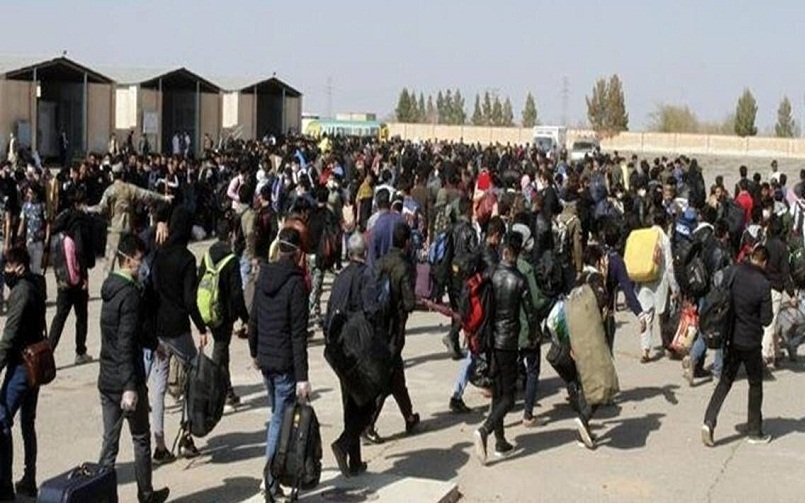

Afghan migrants
TEHRAN: In the first half of the Iranian calendar year, approximately 328,000 Afghan migrants who had entered Iran illegally were repatriated via the northeastern Khorasan Razavi province’s borders.
Majid Shoja, the commander of Khorasan Razavi province’s border police, stated that during the same period, around 488,000 Afghans legally and officially entered Iran.
On August 1, more than 7,500 illegal Afghan migrants were deported to their home country. As part of the strategy to address unlawful migration, the border police identified 7,563 undocumented Afghan nationals and returned them to Afghanistan via the Dogharon border in Khorasan Razavi province, added Shoja. He emphasized that foreign nationals must use legal entry points, or they will face decisive action.
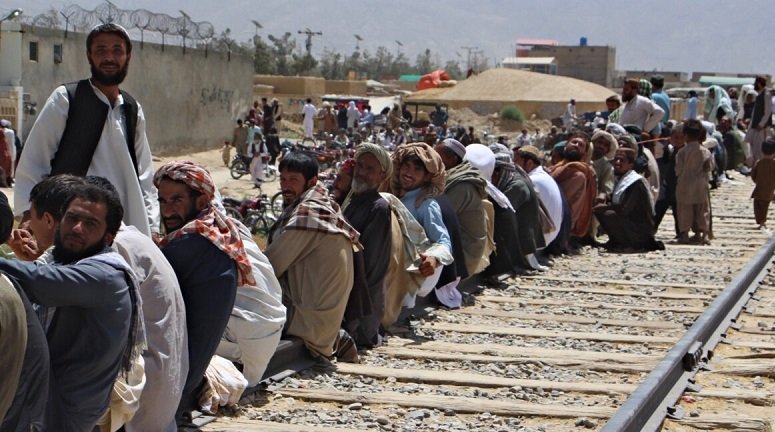
Official statistics indicate that approximately five million Afghan nationals reside in Iran, with around one million in Khorasan Razavi province, predominantly in Mashhad, the provincial capital.
For more than four decades, Iran has hosted one of the world’s largest and longest-standing refugee populations, primarily from Afghanistan. The recent developments in Afghanistan have the potential to trigger additional population movements, leading to internal displacement and potential refuge-seeking in neighboring countries.
Iran currently accommodates over 800,000 registered refugees and roughly 2.6 million undocumented Afghans. Iran’s inclusive education policies, regarded as among the most progressive globally, benefit over 500,000 Afghan children, including undocumented arrivals.
Despite economic pressures and sanctions, Iran continues its comprehensive approach to providing services to refugees, a commitment praised by Inna Gladkova, UNHCR’s Officer in Charge, in November 2022.
Gladkova stressed that the most stable support system for refugees is ensuring access to education, similar to Iranian nationals. Iran has taken consistent steps to integrate all refugees, with UNHCR expressing readiness to fulfill its obligations.
In May, Robin Nandy, UNICEF’s representative in Iran, commended the country’s comprehensive program for protecting refugee children, highlighting its encouraging nature.
