

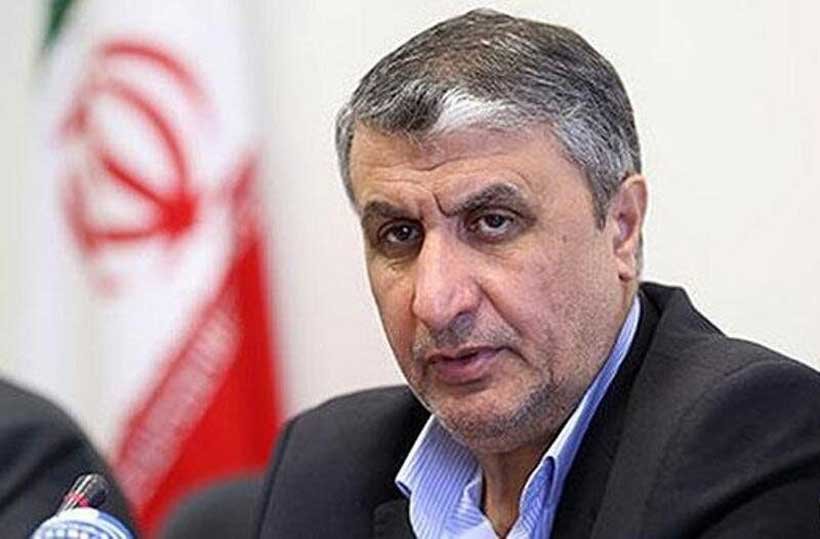

TEHRAN: The head of Iran’s Atomic Energy Organization, Mohammad Eslami, has condemned international organizations for their failure to address the alleged war crimes committed by the Zionist regime in Gaza.
Eslami criticized the organizations for their reluctance to classify the Israeli military’s actions as war crimes, exposing what he perceives as double standards on the global stage.
Expressing concern over the Zionist regime’s threats to use atomic weapons on Gaza, Eslami highlighted the silence of international bodies in the face of such open threats. He emphasized the double standards exhibited by these organizations in the context of the Gaza conflict, asserting that their inaction has brought the crimes of the Zionist regime to the world’s attention.
Referring to Israel’s Heritage Minister, Amichai Eliyahu, who mentioned the option of nuking the Gaza Strip in a November 5, 2023 interview, Eslami condemned such remarks as a global threat, and he conveyed this concern in a letter to the director-general of the International Atomic Energy Agency (IAEA).
Eslami pointed out the historical context of threats to use nuclear weapons by the regime’s prime minister, including past threats against Iran. He also discussed the recent session of the IAEA’s Board of Governors, noting their collective decision to remain silent on Israel’s perceived hostile actions.
Highlighting the ongoing conflict in Gaza, Eslami underscored that various countries explicitly addressed the situation in their statements during the Board of Governors’ session. He noted that the entire session was influenced by the crimes of the occupying regime in Gaza.
Despite truce agreements, the prospects of ending the war remain uncertain. Israeli Prime Minister Benjamin Netanyahu has vowed to continue the conflict, expressing aims to destroy Hamas’ military capabilities, end its rule in Gaza, and secure the release of captives held by Hamas and other resistance groups.
Israel, maintaining ambiguity about its nuclear weapons, is believed to possess an estimated 200 to 400 nuclear warheads.
It is the sole possessor of non-conventional arms in West Asia, refusing inspections of its military nuclear facilities and abstaining from signing the Nuclear Non-Proliferation Treaty (NPT).
