

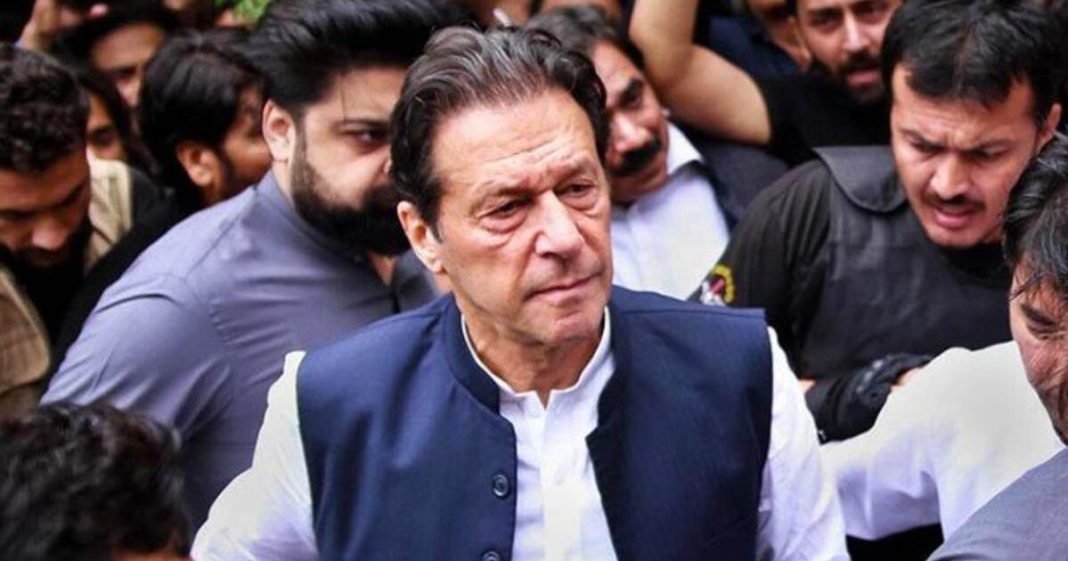

ISLAMABAD: Imprisoned Pakistan Tehreek-e-Insaf (PTI) Chairman Imran Khan voiced grievances about the alleged discrimination his party faces in a letter addressed to Chief Justice of Pakistan (CJP) Qazi Faez Isa. He sought equal opportunities for PTI in conducting its political activities.
In the letter, obtained by Geo.tv, Imran Khan urged the top judge to direct federal and provincial governments along with the Election Commission of Pakistan (ECP) to allow PTI the same rights as other political entities in organizing political gatherings without facing discriminatory hurdles.
The ousted prime minister, removed via a no-trust motion in April last year, highlighted in the letter that PTI members were being targeted through a series of criminal cases, seemingly aimed at keeping them incarcerated. He labeled this approach as a method of abuse and oppression, allegedly widespread across the nation.
Imran Khan emphasized the trend of individuals associated with PTI being repeatedly implicated in multiple cases, sometimes for events several months old. He noted that individuals were ensnared in successive FIRs, seemingly unrelated, in various parts of the country.
The letter drew attention to the prolonged detention of several women arrested in connection to the May 9 events, highlighting their nearly six-month imprisonment.
Imran Khan highlighted PTI’s petitions to provincial high courts against these arrests and cases under undisclosed FIRs. However, he expressed dismay, mentioning that unfavorable observations by a bench of the apex court hindered the high courts from safeguarding the liberties of PTI leaders and activists.
He urged the CJP to take immediate notice of the situation, citing a fresh wave of state operations in Punjab, Khyber Pakhtunkhwa, and Islamabad capital territory following the apex court’s observations.
The letter also addressed the disappearance of PTI-affiliated individuals, their subsequent disassociation from the party, and their scripted press conferences upon reappearance.
Imran Khan asserted that fair general elections were improbable without the Supreme Court’s intervention to halt widespread arrests and abductions.
