

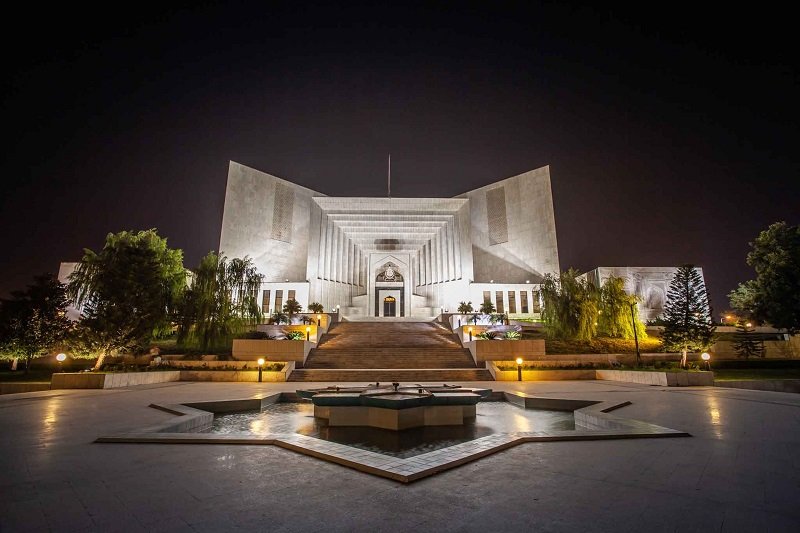

On Monday, the Supreme Court announced its decision to address the issue of lifetime disqualification for lawmakers in January 2024, referring the matter for further consideration to a judges’ committee.
This move came during the hearing of a petition filed by former Pakistan Muslim League-Nawaz (PML-N) provincial lawmaker Sardar Meer Badshah Khan Qaisrani, challenging his lifetime disqualification over a fake degree in 2007.
The two-member bench, led by Chief Justice Qazi Faez Isa and Justice Athar Minallah, observed discrepancies in the Election Act, 2017, and a Supreme Court verdict regarding the duration of disqualification. The court issued notices to the attorney general and provincial law officers, instructing the publication of the case in major English newspapers.
While emphasizing that the case should not be used to delay elections, the court discussed the Panama case, amendments to the Election Act, and three appeals related to disqualification from national and provincial assemblies in the 2008 and 2018 general elections.
Chief Justice Isa questioned the federal government’s stance on lifetime disqualification, to which the attorney general argued that Section 232 is beyond the court’s jurisdiction. Justice Minallah questioned the relevance of the case to the upcoming elections, expressing concerns about its impact.
The petitioner’s lawyer, Saqib Jilani, argued that the case would affect the upcoming elections and explained Qaisrani’s disqualification in 2007 and subsequent approval to contest the 2018 elections based on matriculation. The lawyer emphasized that if the Supreme Court doesn’t decide, Qaisrani intends to contest the next elections despite his disqualification.
CJP Isa highlighted the absence of a specified period of disqualification in Article 62(1)(f) of the Constitution and noted two opinions on lifelong disqualification within the Supreme Court. He raised questions about the Election Act amendments and whether they conflict with the court’s verdict.
The court acknowledged the recent amendment to the Election Act, allowing a maximum five-year disqualification, and discussed the possibility of Parliament nullifying the Supreme Court’s decision. Chief Justice Isa proposed forming a larger bench for constitutional interpretation, emphasizing the need to address the issue of lifetime disqualification.
In conclusion, the court forwarded the matter to a judges’ committee to consider the formation of a larger bench on the constitutional interpretation of lifetime disqualification.
