

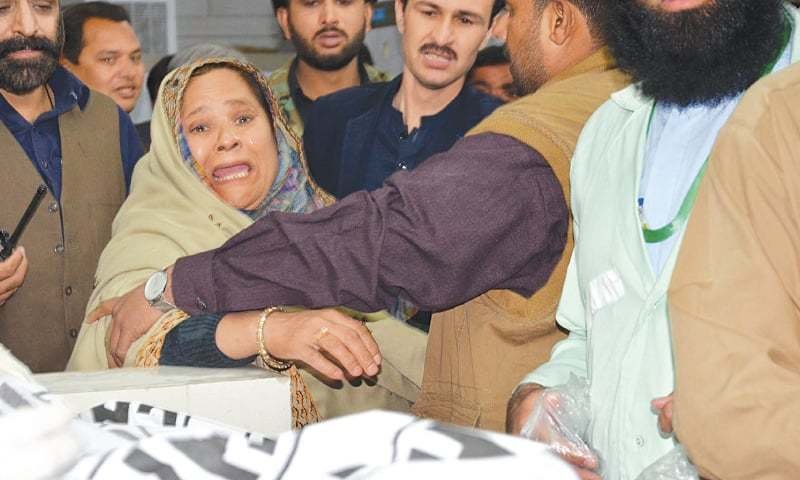

A heart-wrenching incident unfolded at the Abbottabad police station in Nawan Shahr, resulting in a tragic loss of five lives from a single family.
The victims include a mother and her four children, who met a devastating fate due to gas poisoning within the confines of their home.
Initial investigations suggest that the family was utilizing a gas heater in their room, unwittingly turning it into the source of their untimely demise. The fumes, believed to be carbon monoxide, permeated the enclosed space, leading to the fatal outcome.
The sole survivor of this harrowing incident is the father, who reportedly lost consciousness due to the gas but managed to recover. Currently under medical care, he is expected to provide additional details about the tragedy.
Ongoing Over-Billing Concerns: Power Division And NEPRA In Disagreement Regarding Investigation Findings
Meanwhile, the Power Division and the National Electric Power Regulatory Authority (Nepra) are in disagreement over the ongoing problem of over-billing, revealing a divergence in their assessments.
A preliminary report from the Power Division challenges the validity of Nepra’s investigation into consumer over-billing. The report points out flaws in Nepra’s investigation methodology, citing biased sampling, quality control errors, data processing inconsistencies, and a failure to consider operational challenges faced by electricity companies.
While acknowledging that more than 381,510 faulty meters contributed to inaccurate billing, the report uncovers additional discrepancies. In July, over 4.5 million customers received inflated bills exceeding 32-34 days, affecting 846,468 consumers due to slab changes and 198,166 due to shifts from protected to non-protected categories. Furthermore, 11,276 consumers faced bill adjustments after transitioning from lifeline to non-lifeline categories.
Similar issues persisted in August, with over 5.5 million consumers receiving inflated bills. Among them, 825,562 were affected by slab changes, 113,879 shifted from protected to non-protected, and 6,217 transitioned from lifeline to non-lifeline.
