

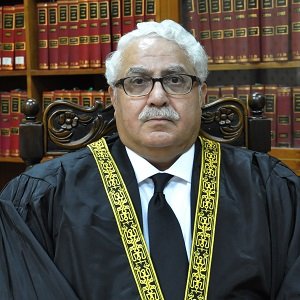

On Thursday, the Supreme Judicial Council (SJC) instructed Justice Sayyed Mazahar Ali Akbar Naqvi, facing misconduct allegations, to respond to the show-cause notice by January 1.
The SJC, led by Chief Justice of Pakistan (CJP) Qazi Faez Isa, includes Justice Tariq Masood, Justice Ijazul Ahsan, Lahore High Court Chief Justice Muhammad Ameer Bhatti, and Balochistan High Court CJ Naeem Akhtar.
Justice Naqvi had sought open proceedings, and the SJC conducted them on his case after his application. The SJC had issued a show-cause notice on October 27, related to 10 complaints against him, with a two-week deadline. In a preliminary reply on November 10, Justice Naqvi claimed bias and requested CJP Isa, Justice Masood, and CJ Akhtar to recuse themselves.
On November 20, Justice Naqvi contested the proceedings and challenged the show-cause notice as unauthorized. A fresh notice was issued, and on December 4, he expressed intent to pursue a constitutional petition to quash it. On December 6, he raised concerns about delays and wrote to the SJC secretary seeking documents.
During open proceedings, Justice Naqvi’s counsel, Advocate Khawaja Harris, mentioned non-receipt of SJC’s records, leading to a discussion on transparency. CJP Isa insisted on openness but noted the SJC couldn’t force a reply. Harris sought necessary documents, and the SJC directed the secretary to provide them. The proceedings were interrupted as Harris questioned Justice Masood’s role, and CJP Isa urged focus on the issue.
After a break, the SJC directed Justice Naqvi to reply by January and submit a witness list. Harris argued against SJC calling witnesses, asserting it was the attorney general’s role. The SJC then instructed the attorney general to provide the witness list, and proceedings were adjourned till January 11.
