


Lifetime Disqualification
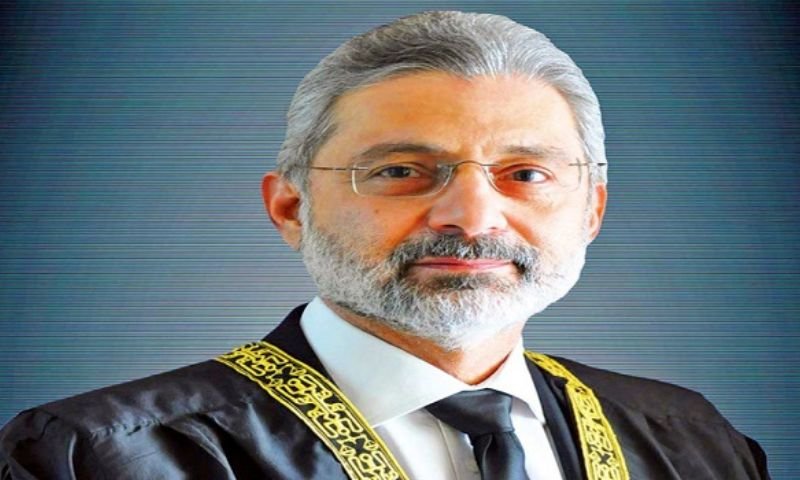
Chief Justice of Pakistan (CJP) Qazi Faez Isa expressed his views on Thursday during the Supreme Court hearing a case related to lifetime disqualification of lawmakers under Article 62(1)(F) of the Constitution.
The case arose due to contradictions in the Election Act, 2017, and a past court verdict. The petitioner, former PML-N lawmaker Sardar Meer Badshah Khan Qaisrani, challenged his lifetime disqualification in 2007 over a fake degree.
The seven-member bench, headed by CJP Isa, sought clarity on whether the disqualification period for lawmakers is five years, as per the 2017 amendment, or a lifetime ban under Article 62(1)(F). CJP Isa cited Islam, stating that disqualifying anyone for life is against Islamic principles, emphasizing the importance of repentance.
The Chief Justice criticized the concept of lifetime disqualification, stating that it closes the door to repentance, contrary to Islamic teachings. He questioned how the court could deny repentance when even God does not. CJP Isa argued that Article 62(1)(F) deems humans bad but imposing a lifetime ban contradicts the potential for forgiveness through repentance.
CJP Isa warned against spreading confusion ahead of the upcoming elections on February 8, emphasizing the need to quickly resolve the constitutional issue. He questioned the perception-based determination of lifetime disqualification under Article 62(1)(F) and cautioned against filing cases in different courts, which could hinder the electoral process.
The lawyer representing petitioners Fayaz Ahmed Ghori and Sajjadul Hasan faced rigorous questioning by the bench. CJP Isa even suggested that the counsel was siding with dictators. The lawyer argued for a constitutional amendment to end lifelong disqualification, asserting that Parliament legislates, but the Supreme Court interprets.
The court debated whether the 2018 ruling in the Samiullah Baloch case, which deemed disqualification under Article 62(1)(F) permanent, could be nullified. The fate of several politicians, including Nawaz Sharif and Jahangir Tareen, hinges on the court’s decision, determining their eligibility for the upcoming polls.
The court adjourned the hearing until the following day. The case seeks to reconcile conflicting interpretations of the law, aiming to provide clarity and prevent confusion among returning officers during the nomination process for the upcoming elections.
