

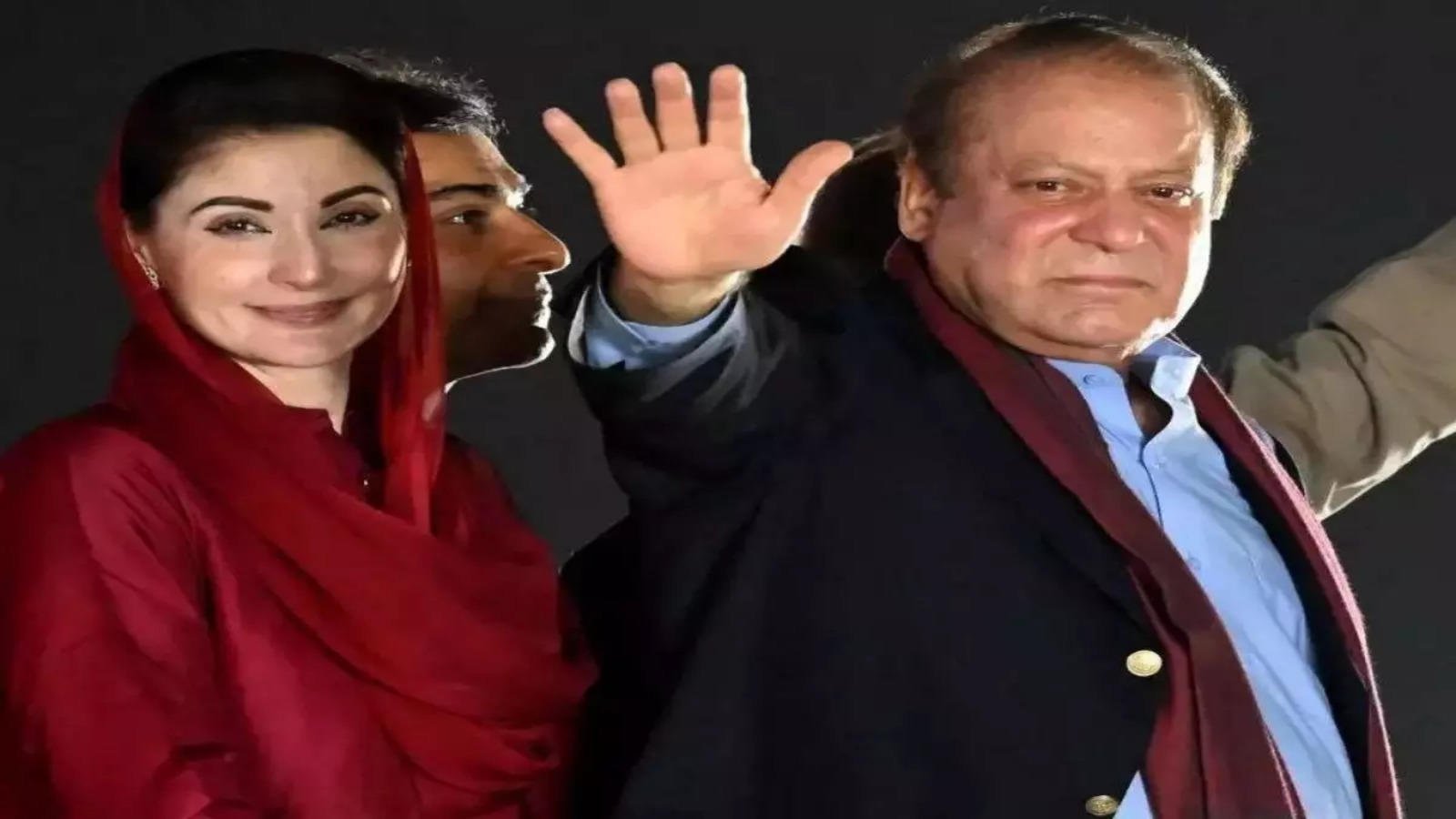

In a recent turn of events, Shehbaz Sharif has been put forth as the prime ministerial candidate for Pakistan by the Pakistan Muslim League-Nawaz (PML-N), replacing Nawaz Sharif, the party’s leader. This nomination was disclosed by PML-N spokesperson Marriyum Aurangzeb.
Nawaz Sharif has also nominated his daughter, Maryam Nawaz, for the position of chief minister of Punjab province. This decision follows the withdrawal of Pakistan Peoples Party (PPP) chairman Bilawal Bhutto-Zardari from the race for the prime ministership.
Bilawal stated that his party would support Nawaz without being a part of the new government. It is widely believed that PML-N enjoys the support of the influential Pakistan Army. Bilawal acknowledged that his party lacked the mandate to establish a federal government.
Earlier, Shehbaz had confidently asserted that Nawaz would secure the position of prime minister for a historic fourth term. Shehbaz expressed gratitude to Bilawal and his father, Asif Ali Zardari, for supporting Nawaz Sharif. Additionally, PML-N and the Muttahida Qaumi Movement-Pakistan (MQM-P) have agreed to progress with mutual cooperation.
Imran Khan dismissed the notion of forming a coalition government with any major political parties in Pakistan. He cautioned his political rivals against establishing a government through ‘stolen votes.’ Bilawal expressed a desire to see his father, Asif Ali Zardari, return to the presidency.
Zardari held the presidency from 2008 to 2013, and Bilawal asserted that Zardari possesses the capability to address the current crisis in the country. He urged all political forces to prioritize the nation’s interests and put an end to divisive politics.
To establish a government, a party must secure 133 seats out of the 265 contested seats in the 266-member National Assembly. In the recent Pakistani elections, no party attained sufficient seats to form a government, resulting in a hung parliament. Nawaz Sharif’s party secured 75 seats, while Bilawal Bhutto Zardari’s party gained 54 seats.
Independent candidates backed by the imprisoned former Prime Minister Imran Khan secured the most seats, totaling 93. Meanwhile, a senior official from Khan’s party disclosed plans to collaborate with two right-wing religious parties to form the government at the national level and in the provinces of Punjab and Khyber-Pakhtunkhwa.
Negotiations for a coalition government are ongoing among these parties and other smaller factions. The National Assembly, comprising 336 seats in total, saw candidates competing for 264 seats, with an additional 70 reserved seats (60 for women and 10 for non-Muslims).
The President is required to convene the National Assembly three weeks after the national election, though it typically occurs earlier. The newly elected assembly then selects a speaker, who subsequently oversees the election of the prime minister. The prime ministerial candidate must secure a simple majority of 169 seats to emerge victorious.
In the event no candidate secures a majority in the initial round, a run-off vote is conducted between the top two candidates, continuing until a majority is achieved. Upon election, the prime minister takes an oath and announces the cabinet. The caretaker setup, responsible for overseeing the elections, then transfers power to the incoming government. The 70 reserved seats are allocated to parties in proportion to the seats they won, excluding independents, who must join a party to be eligible for these reserved seats.
