

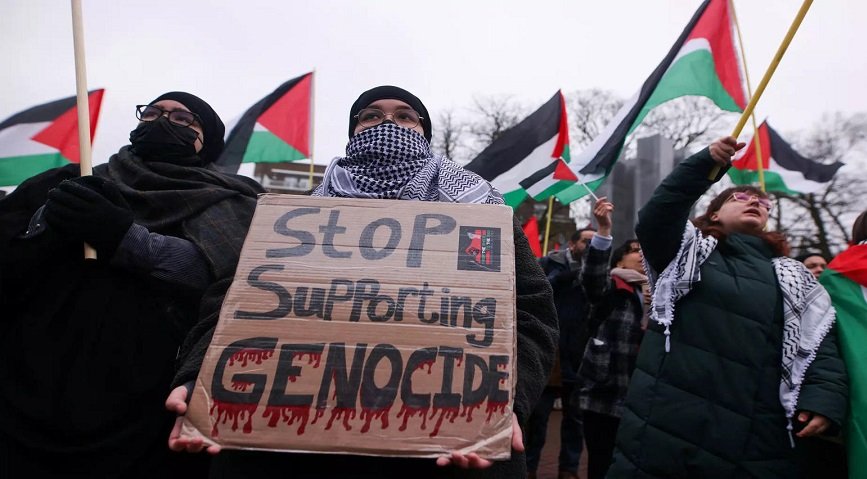

MICHIGAN, USA: At least 10 mosques across southeast Michigan decided to cancel Eid Al-Fitr celebrations – the meal celebrating the end of Ramadan – following exhortations from the Imam’s Council of Michigan to express solidarity with Gaza; instead, the mosques will only host morning prayers and take up collections for Gaza during the two-day Eid celebration that begins Tuesday.
Mindful of the starvation of Gazans, Muslims are taking steps to avoid wasting food and have refrained from posting photos of their mouthwatering meals online; and in that same vein, the city of Dearborn this year cancelled its popular holiday festival, “Ramadan Nights in West Downtown Dearborn”.
In an interview, Dearborn Mayor Abdullah Hammoud explained that the city cancelled the event this year because it encourages an “electric” and “joyous” atmosphere that might be considered offensive.
“There’s no reason for the city to host that event and create an ambiance that some folks might find disrespectful or just not the right time given the blanket of grief that’s covering many of our families,” Hammoud said.
Yasmeen Hamed, a Palestinian American mother of four residing in a Detroit suburb, has long identified as an observant Muslim, though she seldom wore the hijab in public.
Known for her charitable efforts aiding gravely injured Palestinian children under Israeli occupation, she reserved the hijab for mosque visits but refrained from adhering to the religious mandate of wearing it constantly in public.
However, witnessing the harrowing images of Israel’s siege of Gaza on her phone deeply affected her. The staggering violence and the unwavering devotion of Palestinian women, who continued to wear their blood-stained prayer garments despite the peril, moved her profoundly.
Their resilience inspired Yasmeen to recommit herself wholly to Islam, a faith she had previously kept at a slight distance. On the first day of Ramadan this year, she embraced the hijab, signifying both her strengthened faith and her solidarity with Gaza’s besieged women.
As Ramadan draws to a close and Israel’s bombardment of Gaza persists, Yasmeen finds herself praying more fervently and reaching for her hijab whenever she steps out of her home, an act as instinctive as grabbing her purse.
Reflecting on her renewed commitment, she shared, “With what’s happening in Gaza, you’re questioning your mortality…I didn’t want to die not wearing the hijab. When I was younger I used to say, ‘Oh, I’ll be more religious when I get older. I’ll go to Hajj when I’m older. I’ll put the hijab on when I’m older’ and well, I’m older now.”
This Ramadan holds a different resonance for Muslims like Yasmeen across the United States.
Typically a time of fasting, celebration, and charity, this year’s holy month has been overshadowed by somber reflection since its commencement on March 10, coinciding nearly five months after Israel’s onslaught on Gaza began.
The staggering toll of Palestinian casualties, with over 33,175 killed and another 75,886 wounded, has imbued this Ramadan with a more contemplative and emotional tone.
Muslims in the US grapple with their connection to Allah and each other amidst a genocide so devastating that it has obliterated entire families and bloodlines, leaving no survivors to carry on their names.
