

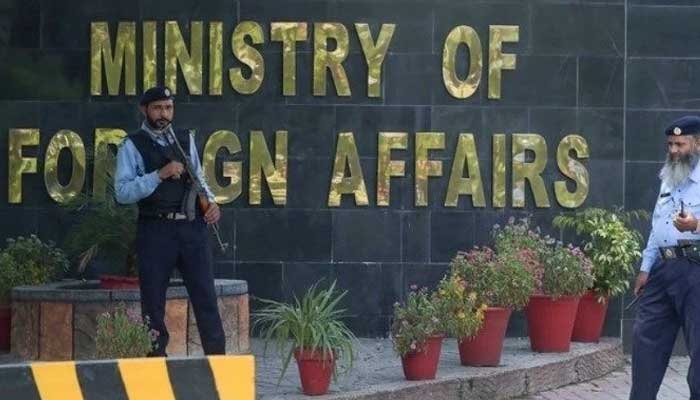

The Foreign Office (FO) has raised concerns over the use of modern American weapons, left behind in Afghanistan, by terrorist groups conducting attacks inside Pakistan. A spokesperson from the FO confirmed that these weapons are being utilized in acts of terrorism within Pakistan, intensifying the security threat posed by militants.
During a briefing on Wednesday, the FO spokesperson also addressed a recent development at the Torkham border, where the Afghan side attempted to establish a checkpoint. The spokesperson clarified that Pakistan’s border management system is robust, with multiple institutions working in coordination to ensure security and proper oversight.
Concerns over Abandoned US Military Weapons in Afghanistan
The FO spokesperson reiterated concerns regarding the abandoned US military equipment in Afghanistan, which has fallen into the hands of terrorist groups. The spokesperson emphasized that these weapons are being used for terrorist activities within Pakistan, adding to the security challenges faced by the country.
Pakistan-U.S. Relations and F-16 Program
Shafqat Ali Khan, the FO spokesperson, also discussed the longstanding diplomatic relations between Pakistan and the United States. He highlighted the significance of defense cooperation, including the F-16 program, and welcomed recent U.S. decisions related to it.
Repatriation of Pakistani Nationals
The FO spokesperson confirmed that Pakistan will continue to accept its returning citizens, asserting their rights as Pakistani nationals. The spokesperson also clarified that Pakistan had not been informed of any visa restrictions imposed by Saudi Arabia. The Pakistani government is closely monitoring the situation, given the large number of Pakistani nationals residing in Saudi Arabia.
Deportation of Pakistani Nationals from the U.S.
In a separate development, the FO spokesperson confirmed the deportation of eight Pakistani nationals from the United States, marking the first batch of such repatriations. The spokesperson stated that the Pakistani government is in contact with U.S. authorities regarding further deportations, though additional details about future cases were not provided. The Federal Investigation Agency (FIA) and the Ministry of Interior are overseeing the verification of the identities of the deported individuals.
Pakistan-Japan Bilateral Political Consultations
The fourth round of Pakistan-Japan bilateral political consultations took place in Tokyo, with discussions centered on regional and global security, including the growing concern of terrorism. The FO spokesperson reiterated Pakistan’s concerns about the abandoned advanced U.S. weaponry in Afghanistan and the risks associated with these arms falling into the hands of terrorists.
Foreign Visits and Diplomatic Engagements
Pakistan’s diplomatic engagements were also discussed, with notable visits from Prime Minister Shehbaz Sharif to Azerbaijan and Uzbekistan. In Tashkent, the Prime Minister addressed the Pakistan-Uzbekistan Business Forum, focusing on regional connectivity and trade through railway corridors via Afghanistan.
In addition, Pakistan’s Foreign Minister Ishaq Dar attended the UN Security Council ministerial meeting, voicing concerns over the situations in Gaza and Indian-occupied Kashmir. He also met with the Chinese Foreign Minister and Pakistani community members in New York.
Strengthening Pakistan-UAE Relations
The Prime Minister’s invitation led to the Crown Prince of Abu Dhabi’s official visit to Pakistan, where both nations signed five Memorandums of Understanding (MoUs) in key sectors such as trade and tourism, further solidifying bilateral ties between the two countries.
