

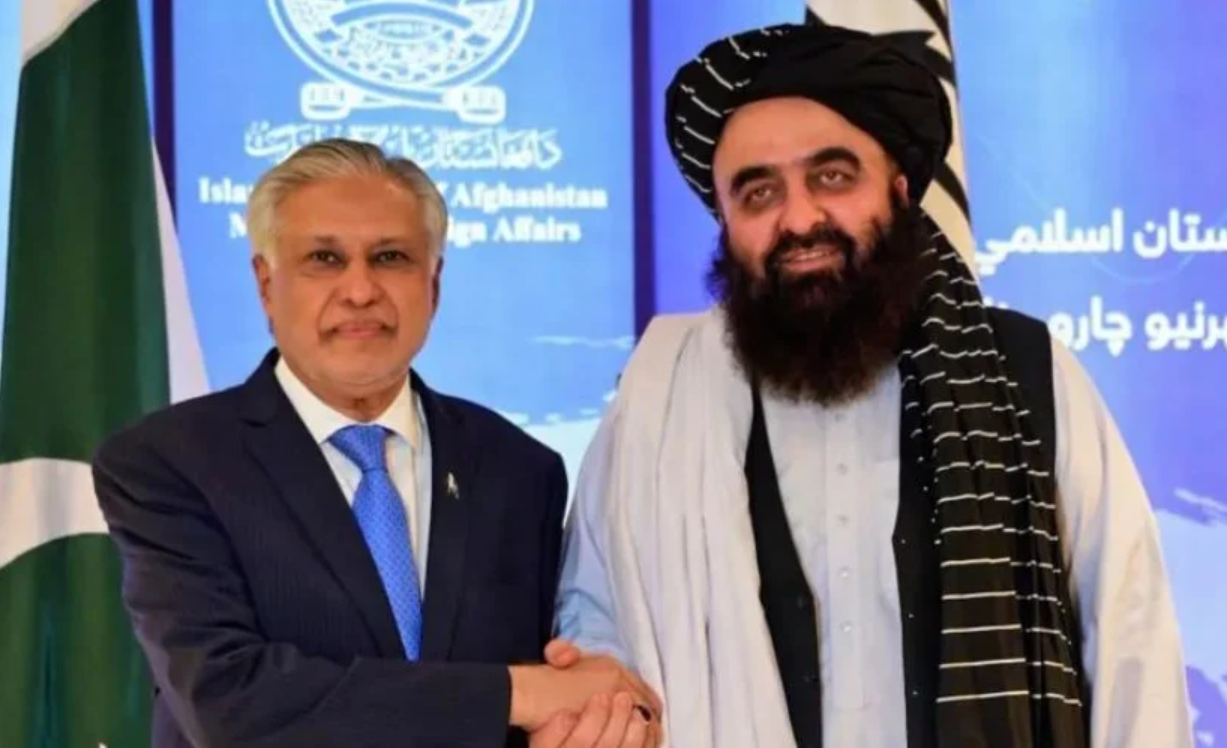

Afghan Foreign Minister Amir Khan Muttaqi has urged Pakistan and India to reopen the Wagah Border for trade, highlighting that regional economic cooperation should not be hindered by political disagreements.
Speaking during a press conference in New Delhi, Muttaqi emphasized that reopening the vital trade route would help strengthen economic ties among Afghanistan, Pakistan, and India. He stated that the initiative would benefit millions by lowering transportation costs and improving access to regional markets.
“Pakistan and India should open the Wagah Border for us. This will facilitate trade between Afghanistan and India,” said Muttaqi.
The minister’s appeal reflects Afghanistan’s growing effort to restore its regional trade channels and reduce reliance on limited transit routes through Central Asia and Iran.
Trade Should Be Separate from Politics, Says Muttaqi
Muttaqi underscored that trade and economic development must remain separate from political disputes, suggesting that increased commercial engagement could promote stability and prosperity across South Asia.
“Trade should be seen separately from politics,” he stated, adding that Afghanistan’s economy could recover faster through enhanced regional cooperation. The reopening of Wagah Border, he said, would help Afghan exporters gain direct access to Indian markets, reducing logistical delays and cutting costs for small businesses.
The Afghan minister further noted that such economic initiatives could serve as a foundation for regional peace, as stronger commercial interdependence encourages diplomatic engagement.
India to Reopen Embassy in Kabul, Restoring Diplomatic Ties
During the same visit, India announced plans to reopen its embassy in Kabul, a move that marks a significant step toward restoring full diplomatic relations with the Taliban-led Afghan government. The decision came nearly four years after the closure of the mission following the Taliban takeover in 2021.
In a joint meeting between Amir Khan Muttaqi and Indian Foreign Minister Subrahmanyam Jaishankar, both sides expressed interest in reviving bilateral relations. Jaishankar confirmed that India’s existing technical mission in Kabul would be upgraded to a full embassy, though he did not announce a specific timeline.
Muttaqi welcomed India’s decision and invited Indian investors to explore opportunities in Afghanistan’s energy, infrastructure, and mining sectors. He assured that no militant groups would be allowed to use Afghan territory against any neighboring country — a statement aimed at easing regional security concerns.
India Emphasizes Regional Stability and Cooperation
Foreign Minister Jaishankar praised Afghanistan’s willingness to engage with its neighbors, emphasizing that cooperation between the two nations would strengthen regional resilience.
“India is fully committed to the sovereignty, territorial integrity, and independence of Afghanistan,” he said. “Closer cooperation between us contributes to your national development, as well as regional stability.”
He reiterated that India and Afghanistan share a deep historical connection based on mutual respect, trade, and cultural ties. Jaishankar also reaffirmed India’s support for humanitarian assistance, education, and infrastructure projects in Afghanistan.
Regional Trade as a Pathway to Stability
Experts suggest that reopening the Wagah Border could redefine South Asia’s trade dynamics, offering Afghanistan a direct link to one of its largest potential markets. The move could also help Pakistan enhance its transit revenues while promoting peace through economic interdependence.
Analysts believe that regional economic integration is key to stabilizing Afghanistan’s fragile economy and countering the effects of decades of conflict. The success of this initiative, however, depends on political will and mutual trust among the three nations.
If Pakistan and India agree to the proposal, the Wagah Border could once again become a gateway of regional trade, fostering stronger ties between South and Central Asia while setting a precedent for cooperation beyond politics.
