

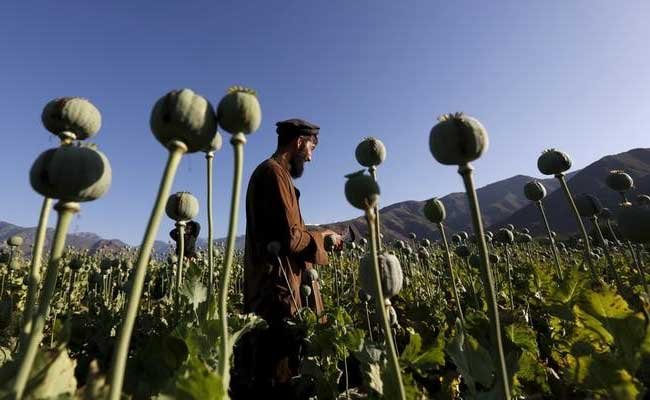

Afghanistan has been officially identified as one of the world’s leading centers of opium production, according to a new report released by the United Nations Office on Drugs and Crime (UNODC). The findings reveal a significant 19% increase in opium cultivation in 2024, solidifying Afghanistan’s role as a key player in the global narcotics market.
Sharp Rise in Opium Cultivation Across Key Provinces
The UN report estimates that opium poppies were cultivated on 10,200 hectares of land across Afghanistan, with overall production and stockpiles rising to alarming levels. Despite economic turmoil, persistent drought, and political uncertainty, cultivation continued to expand well into 2025.
The provinces of Zabul, Kunar, and Takhar recorded the steepest increases in poppy cultivation, highlighting the growing dependence of rural communities on the opium economy amid limited livelihood options. Even with weather-related crop losses, UNODC analysts noted that Afghanistan’s current opium output is sufficient to meet global demand through 2026.
In 2025 alone, the country’s total opium production reached approximately 296 tons, securing its position among the top three opium-producing nations worldwide.
Rise of Synthetic Drugs Poses New Challenges
Beyond opium, the UNODC report warns of a worrying shift in the narcotics trade toward synthetic drug production, particularly methamphetamine, commonly known as “ice.” According to the report, criminal networks are increasingly turning to meth due to its higher profitability, easier production process, and simpler smuggling routes compared to traditional opium-based drugs.
The expansion of synthetic drug manufacturing in Afghanistan marks a new and complex phase in the global narcotics landscape, complicating efforts to curb illegal drug trafficking and production. The UNODC cautioned that this trend could further destabilize the region, as synthetic drugs are less reliant on seasonal agriculture and can be produced year-round.
Afghanistan’s deepening role in both opium and synthetic drug markets underscores the urgent need for coordinated international strategies to combat drug production and support alternative livelihoods for vulnerable farming communities.
