

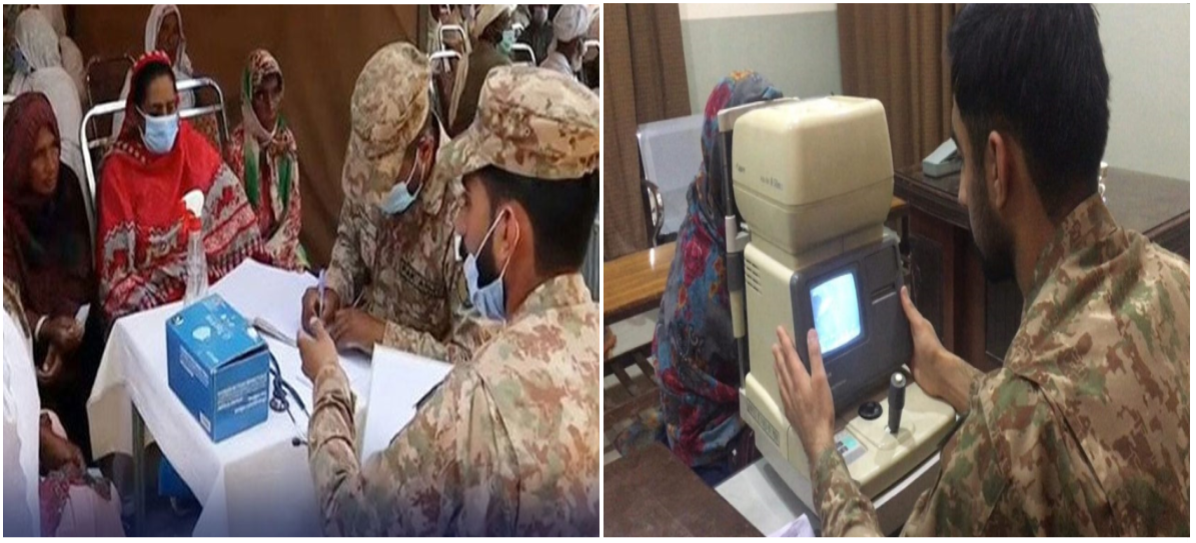

In a collaborative endeavor, a group of Ophthalmologists associated with Al Shifa Eye Trust Rawalpindi, joined forces with the Pakistan Army to conduct a two-day free eye camp at the RHQ Hospital in Gilgit.
On the opening day, proficient eye specialists provided complimentary examinations, focusing on the diagnosis and treatment of various eye conditions, with a specific emphasis on cataracts.
The objective of the free medical camp was to extend vital eye treatment to the residents of Gilgit-Baltistan, ensuring their access to quality healthcare services.
Patients attending the camp not only underwent thorough examinations but also received necessary treatments for various eye-related diseases.
Additionally, the initiative included the distribution of free eyeglasses and medicines to those in need, easing the financial burden on individuals requiring these essential resources.
Thousands of patients in Gilgit-Baltistan benefited from this commendable initiative, showcasing the positive impact of collaborative healthcare efforts in remote regions.
The Commander FCNA, in collaboration with the management of Al Shifa, visited the hospital, using the opportunity to interact with the patients and gain insights into their healthcare experiences.
This thoughtful gesture exemplifies the commitment of both Al Shifa Eye Trust and the Pakistan Army, not only to provide medical assistance but also to engage with the community on a personal level.
The Pakistan Army has consistently shown dedication to the welfare of the people in Gilgit, organizing free medical camps periodically.
These initiatives play a crucial role in ensuring that every district receives fundamental health facilities, promoting a healthier and more resilient local population.
The success of this two-day eye camp highlights the positive impact that collaborative efforts between healthcare organizations and the military can have on community well-being.
As the medical community continues to collaborate with the armed forces, the people of Gilgit can anticipate continued access to essential healthcare services.
