

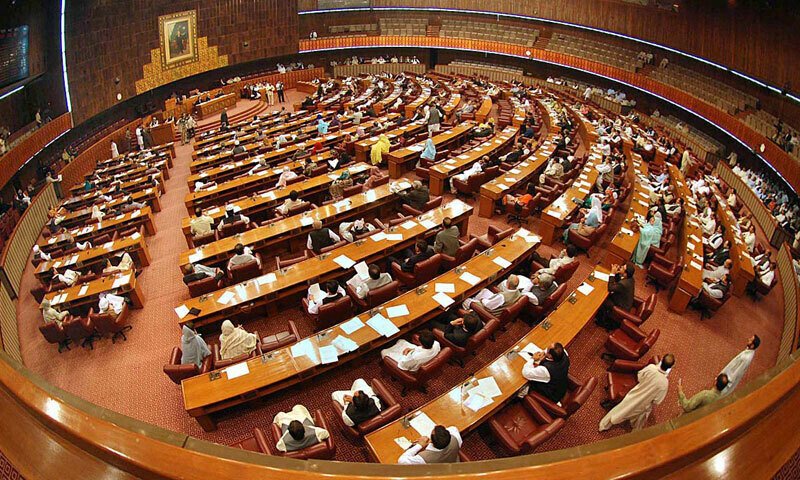

ISLAMABAD: Officers of the armed forces will receive a special relief allowance equal to 50% of their basic salary, while junior commissioned officers (JCOs) and soldiers will receive 20%, the Ministry of Finance informed the National Assembly’s Standing Committee on Finance and Revenue on Thursday.
The announcement came during a post-budget briefing led by Secretary Finance Imdadullah Bosal, with Finance Minister Muhammad Aurangzeb also in attendance. The meeting was chaired by MNA Syed Naveed Qamar.
Bosal stated that the allowances had been granted as part of the relief measures outlined in the federal budget for 2024–25. However, the ministry did not disclose the financial implications of these allowances, nor did it clarify why officers were receiving a higher percentage than JCOs and soldiers. Minister Aurangzeb promised to provide detailed figures in follow-up responses, acknowledging concerns raised by Opposition Leader Omar Ayub.
Development Spending Cut
Bosal also revealed that the Public Sector Development Programme (PSDP) for the current fiscal year had been revised downward from Rs1.1 trillion to Rs967 billion, and warned that even this revised amount may not be fully spent by June 30, as only Rs662 billion had been disbursed so far.
Committee members expressed concern that this reduction would undermine growth projections—currently estimated at 2.7% of GDP—and distort other economic indicators that were based on the earlier investment figure.
Macroeconomic Outlook and Monetary Policy
Finance Minister Aurangzeb projected that the central bank’s policy rate could drop to single digits before the end of the calendar year, citing easing inflation and improved fiscal and current account indicators. He said the Monetary Policy Committee would meet soon and had “room to do more,” but refrained from elaborating, noting the matter fell under the State Bank of Pakistan’s jurisdiction.
He also confirmed that Pakistan was set to receive $1 billion in foreign inflows by fiscal year-end through a syndicated banking arrangement, backed by a $500 million Asian Development Bank guarantee, which will be doubled next year. This would push foreign exchange reserves from $11 billion to $14 billion.
Debt Management and Borrowing Plans
Aurangzeb said Pakistan aims to double commercial and capital market borrowing next year as the country’s credit ratings improve. The government plans to repay $500 million in bonds maturing in September and $1.2 billion in April 2026, on time.
Bosal added that non-tax revenue—mainly from SBP profits—stood at Rs2.6 trillion this year and is projected at Rs2.4 trillion next year, thanks to higher interest rates. Typically, SBP profit contributions average around Rs1 trillion.
Petroleum Levy and Carbon Tax
Bosal disclosed that the petroleum levy was currently Rs78 per litre on diesel and Rs77 per litre on petrol. It will be raised by Rs2.5/litre under a new carbon levy, averaging Rs80/litre. An additional levy on furnace oil will help increase total petroleum development levy revenue to Rs1.468 trillion, up from Rs1.161 trillion this year.
He confirmed the removal of the upper cap on the petroleum levy, noting an increase of Rs10/litre for power subsidies and Rs8/litre for the Quetta-Karachi (N25) highway. However, he stressed that there are no plans for further increases.
Allocations to Special Regions and BISP
- Benazir Income Support Programme (BISP): Allocation increased by 21%, reaching Rs716 billion from Rs592 billion.
- Azad Kashmir: Grant raised by 33%, from Rs105 billion to Rs140 billion.
- Gilgit-Baltistan: Increased to Rs80 billion from Rs68 billion, with an additional Rs20 billion wheat subsidy.
- Tribal merged districts: Funding boosted to Rs80 billion, up from Rs66 billion.
Privatisation Goals and Provincial Support
Aurangzeb acknowledged the challenges in achieving the Rs87 billion target from privatisation, noting that no major transactions were completed this year. Still, he expressed optimism, citing ongoing reforms and IMF-supported incentives. Key upcoming deals include PIA, Roosevelt Hotel, three DISCOs, and financial sector listings.
He also praised the provinces for delivering over Rs1 trillion in surplus, helping reduce the overall fiscal deficit to 5.6% of GDP. Next year, the federal government targets a consolidated deficit of 3.9%, assuming provincial surpluses of Rs1.464 trillion.
Committee’s Concerns
Committee members raised concerns on a broad range of issues, including:
- Low tax-to-GDP ratio and revenue shortfalls
- New taxes on solar panels, hybrid vehicles, and cotton
- Rising public debt and private sector lending constraints
- Insufficient support for SMEs, agriculture, and industry
- WHT on ATMs, gender-based allocations, electric vehicle policy
- Declining manufacturing and agriculture growth
- Climate change adaptation, customs inefficiency, and border smuggling
The committee stressed the need for structural reforms, social protection expansion, and fiscal transparency, urging the government to balance development needs with macroeconomic stability.
