

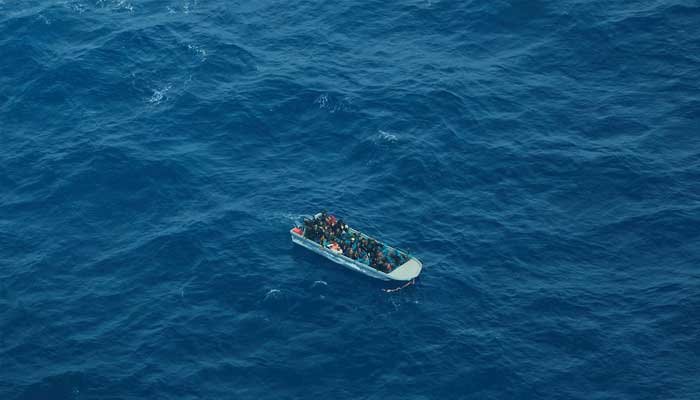

The Ministry of Foreign Affairs (MoFA) confirmed on Tuesday that at least 16 Pakistanis have lost their lives in a boat tragedy near the coast of Libya, while 10 others remain missing. The boat, which was carrying illegal migrants, sank off the coast of Libya, leading to this devastating loss of life.
In a statement, the Foreign Office (FO) revealed that a team from the Pakistan Embassy in Tripoli visited Zawiya city to gather information from local authorities and the administration at Zawiya hospital. According to unverified reports, there were 63 Pakistanis on board the ill-fated vessel, with 16 bodies recovered so far. These bodies have been identified as Pakistani nationals based on their passports.
The statement further added that there are currently 37 survivors, with one person hospitalized and 33 others in police custody. Around 10 Pakistanis are still missing after the tragedy, and three of the survivors are currently being looked after by the embassy in Tripoli.
The Foreign Office also provided details about the deceased, confirming that all 16 identified victims hailed from Khyber Pakhtunkhwa province. The embassy in Tripoli is continuing to collect more information and is in constant contact with local authorities.
The confirmation follows an earlier statement from MoFA, which had reported that a boat with approximately 65 passengers capsized near the port of Marsa Dela, northwest of Zawiya City, Libya. The Pakistan Embassy in Tripoli had dispatched a team to Zawiya Hospital to assist local authorities with identifying the bodies.
A Crisis Management Unit (CMU) was activated by the Ministry of Foreign Affairs to monitor the situation, and a helpline (051-9207887) has been established for those seeking information. For those in Libya, the relevant contacts are available via WhatsApp and cellphone at +218913870577 and +218916425435, respectively.
Prime Minister’s Response and Condemnation
In a statement expressing his concern over the tragic event, Prime Minister Shehbaz Sharif termed the incident “deeply concerning.” He directed the Foreign Office and the Pakistani mission in Libya to investigate the matter and provide the nation with updates as quickly as possible.
The Prime Minister assured that strict action would be taken against those responsible for human trafficking and illegal migration. He emphasized that no negligence would be tolerated in addressing this heinous practice.
Increasing Frequency of Migrant Boat Tragedies
This tragic event in Libya is the latest in a series of boat disasters involving Pakistani migrants. Over the past few months, several such incidents have resulted in the deaths of dozens of Pakistanis, underscoring the growing risks associated with illegal migration.
In January, more than 40 Pakistanis were killed when a boat carrying irregular migrants from Mauritania to Spain capsized. The boat had set sail from Mauritania on January 2, 2025, carrying 86 passengers, 66 of whom were Pakistani nationals. Moroccan authorities were able to rescue 36 individuals from the wreckage, while the others tragically lost their lives.
Before that, in December 2024, more than 80 Pakistanis drowned when a boat carrying migrants capsized off the coast of Greece on the night between December 13 and 14. These tragic incidents highlight the dangerous journey that many Pakistanis undertake in search of better economic opportunities in Europe, despite the inherent risks.
The Human Cost of Illegal Migration
Driven by socio-economic challenges and the allure of better prospects abroad, illegal migration continues to draw people to risk everything, including their lives, by paying human traffickers large sums to reach Europe. Despite the clear dangers, many are willing to take the risk, often driven by desperation to escape financial hardship and lack of opportunities.
The Pakistani government, led by Prime Minister Shehbaz Sharif, has vowed to take strict action against human traffickers and the officials facilitating their operations. As part of the crackdown, 35 officials from the Federal Investigation Agency (FIA) have been dismissed for their alleged involvement in human trafficking or their failure to act decisively. The government also removed former FIA Director-General Ahmad Ishaq Jahangir from his post, citing the slow pace of investigations into boat accidents and illegal migration cases.
Religious Perspective on Illegal Migration
In addition to government measures, the religious community has also weighed in on the issue. Lahore’s Jamia Naeemia issued a religious edict (fatwa) condemning the use of illegal means to travel abroad. The fatwa, issued by prominent religious scholars Dr. Mufti Raghib Hussain Naeemi and Mufti Imran Hanfi, stated that using unlawful means to leave Pakistan, including illegal migration facilitated by human traffickers, is not only illegal but also violates Islamic teachings (Shariah).
The religious decree calls on the people of Pakistan to avoid such dangerous and illegal routes, emphasizing that no good can come from engaging in such unlawful practices. This fatwa adds a spiritual dimension to the ongoing debate about illegal migration and human trafficking.
Government Measures and Long-Term Solutions
The Pakistani government has made several moves to address the rising number of illegal migration cases. In addition to dismissing FIA officials and changing leadership, the government has ramped up efforts to combat human trafficking and the exploitation of vulnerable individuals. As part of these efforts, Pakistan has called for enhanced international cooperation to prevent human trafficking networks from operating freely.
The government is also working with international organizations to raise awareness about the risks of illegal migration and provide alternatives for those seeking better opportunities. These efforts include improving local economic conditions, providing better employment prospects, and creating social safety nets to reduce the economic pressures that push people toward dangerous migration routes.
The tragic events in Libya and other recent boat accidents have highlighted the urgent need for a comprehensive strategy to combat human trafficking, protect vulnerable individuals, and address the root causes of illegal migration.
Conclusion: The Need for Urgent Action
The boat tragedy off the coast of Libya, which has claimed the lives of at least 16 Pakistanis, is yet another tragic reminder of the dangers of illegal migration. While the Pakistani government and foreign ministry are working to identify the victims and assist the survivors, this incident also underscores the need for greater efforts to combat human trafficking and the exploitation of vulnerable individuals.
As the nation mourns the loss of those who perished in this tragedy, it is crucial that the government takes swift and decisive action to dismantle the networks that facilitate illegal migration. At the same time, efforts must be made to address the socio-economic factors that drive individuals to take such dangerous journeys. Through a combination of stricter enforcement, improved economic opportunities, and public awareness campaigns, the government can help reduce the allure of illegal migration and ensure the safety of its citizens.
