

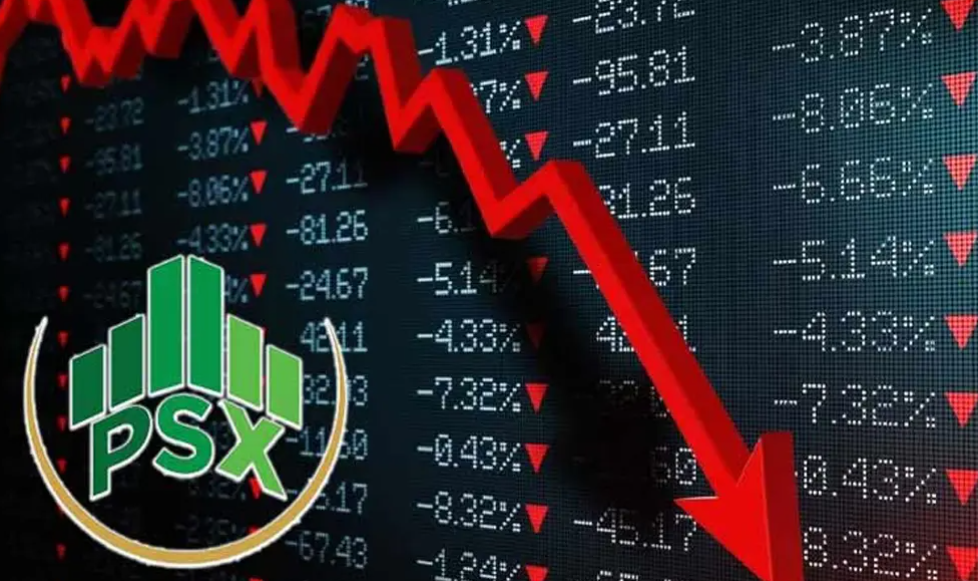

Bloodbath at PSX
KARACHI: The Pakistan Stock Exchange (PSX) witnessed one of its most severe plunges in recent history on Thursday, as mounting tensions between Pakistan and India sent shockwaves through financial markets. The benchmark KSE-100 Index tumbled over 8,000 points in a single day, prompting a temporary trading halt to contain panic-induced selling.
The dramatic sell-off occurred after India reportedly launched a series of drone attacks on major Pakistani cities, including Lahore, Gujranwala, Rawalpindi, Attock, Bahawalpur, and Karachi. The strikes, which targeted civilian areas and places of worship, have been described by Pakistani authorities as a blatant violation of the country’s airspace and sovereignty.
According to the Inter-Services Public Relations (ISPR), the drone strikes occurred during the night of May 7-8. In a press briefing, ISPR Director General Lt. General Ahmed Sharif Chaudhry confirmed the attacks and stated that one civilian was martyred while four soldiers were injured. He further revealed that Indian forces used Israeli-manufactured drones in the operation, escalating fears of a broader regional conflict involving foreign military technology.
Following the attacks, investor sentiment at the PSX plummeted. The KSE-100 Index fell below the critical psychological threshold of 102,000 points, triggering widespread panic among traders and institutions. Though trading was temporarily halted to prevent further losses, the market continued its downward spiral after resumption, reflecting deep-rooted anxiety over regional instability.
Market analysts noted that this sharp decline reflects not only geopolitical uncertainty but also the overall vulnerability of Pakistan’s financial ecosystem to external shocks. “Investors are clearly reacting to the rising risk of military escalation, and such drastic movements show just how sensitive the market is to geopolitical events,” said one market expert.
With tensions between the two nuclear-armed neighbours intensifying, traders and policymakers alike are bracing for potential aftershocks—both on the battlefield and in the financial arena.
