

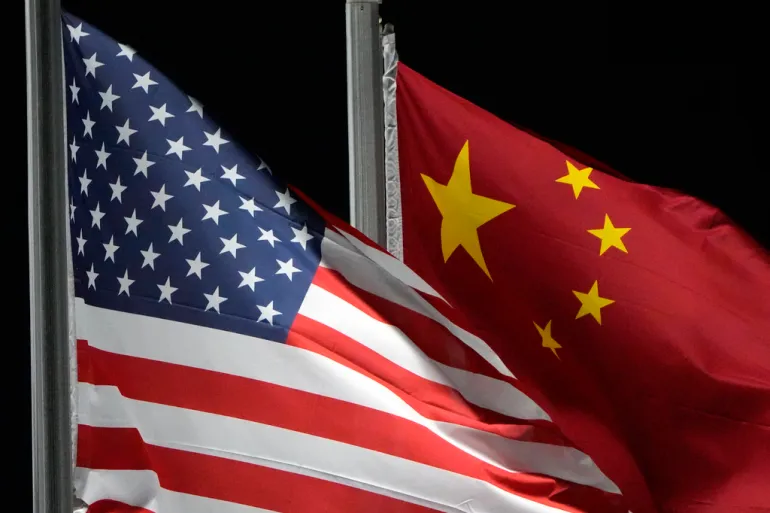

China has swiftly responded to new US tariffs by raising import duties on $21 billion worth of American agricultural and food products, escalating tensions between the world’s top two economies and edging them closer to an all-out trade war.
The Chinese government also imposed export and investment restrictions on 25 US firms, citing national security concerns. However, it avoided targeting major household names, unlike in its retaliation against the Trump administration’s tariffs in February.
A Chinese foreign ministry spokesperson stated, “Trying to exert extreme pressure on China is a miscalculation and a mistake,” adding that China would not submit to bullying or coercion.
These retaliatory actions followed the implementation of a 10% tariff imposed by former US President Donald Trump on March 4, raising the cumulative tariff to 20% as part of the White House’s stance on Chinese inaction regarding drug flows. China has accused the US of “blackmail,” emphasizing that it has some of the toughest anti-drug policies in the world.
Analysts believe that while China still hopes to negotiate a tariff truce, it deliberately set its tariffs below 20% to allow room for discussions. However, every new escalation reduces the chances for reconciliation.
“China’s government is signaling they do not want to escalate,” said Even Pay, an agriculture analyst at Trivium China. “We are still in the early days of Trade War 2.0,” Pay added, noting that there is still time to avoid a prolonged conflict if leaders from both countries can reach a deal.
Later on Tuesday, China announced it would investigate US producers of optical fiber for circumventing anti-dumping measures, suspended the import licenses of three US exporters, and halted US lumber shipments to China.
The new US tariffs are an additional increase on existing levies that were placed on thousands of Chinese goods, including major consumer electronics like smartphones, laptops, and gaming consoles.
China responded with its own tariff hikes: a 15% tariff on US chicken, wheat, and cotton, as well as a 10% increase on soybeans, sorghum, pork, beef, aquatic products, fruits, vegetables, and dairy products starting March 10. These additional tariffs will affect about 15% of US exports to China, worth approximately $21 billion, based on 2024 trade data.
China also added 15 US companies to its export control list, restricting Chinese firms from supplying them with dual-use technologies, and placed 10 US companies on its Unreliable Entity List for their involvement in arms sales to Taiwan, which China claims as its own.
Despite these developments, analysts believe the tariff hikes may not significantly shift global supply chains. “At 35%, we will start to see companies consider other strategies,” said Cameron Johnson, a supply chain expert at Tidalwave Solutions.
Agriculture has long been a key sector vulnerable to trade tensions between the US and China, with China being the largest market for US agricultural products. However, Chinese imports of US agricultural goods fell for the second consecutive year, dropping from $42.8 billion in 2022 to $29.25 billion in 2024.
The escalating trade tensions risk exacerbating US inflation and complicating China’s efforts to sustain its post-COVID economic recovery, which has heavily relied on exports. The US-China Business Council (USCBC) expressed concern that the tariff hikes would harm US businesses, consumers, and farmers, undermining global competitiveness.
While the trade war has caused harm to both economies, third countries may benefit. As the US and China impose tit-for-tat tariffs, China has reduced its reliance on American agricultural goods, increasing imports from countries like Brazil. US agricultural exporters may look to other markets, such as Southeast Asia, Africa, and India, to replace the lost China market.
“Chinese tariffs on US wheat and corn should support demand for Australian wheat and barley exports,” said Dennis Voznesenki, an analyst at Commonwealth Bank in Sydney. However, the overall slowdown in China’s feed grain imports could limit the impact.
