

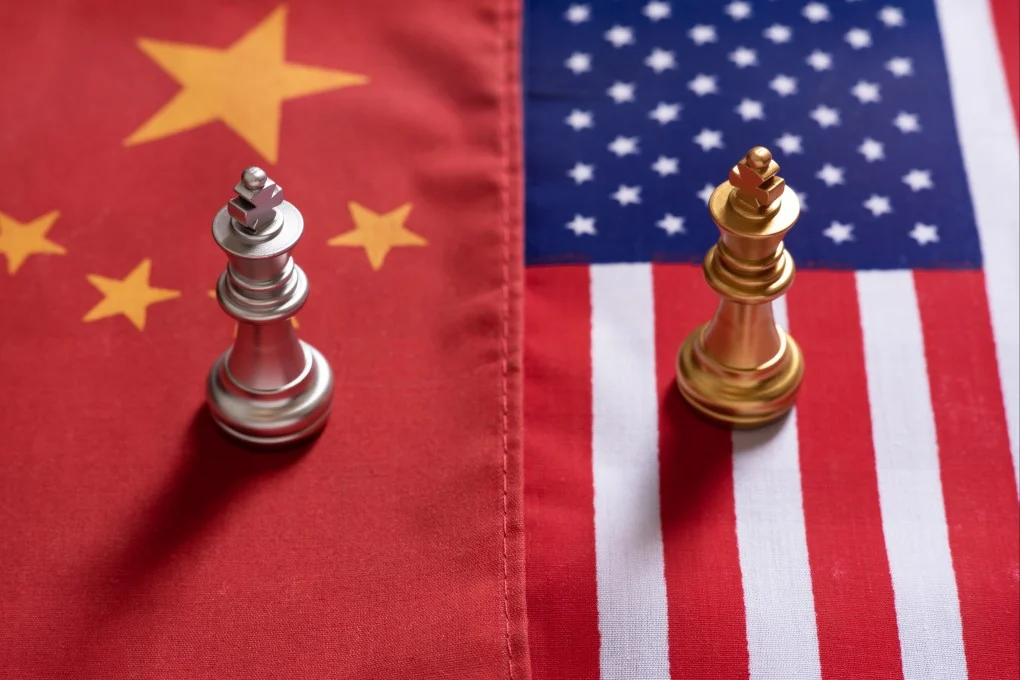

China imposed new tariffs on U.S. imports on Tuesday in swift retaliation to fresh U.S. duties on Chinese goods, escalating trade tensions between the world’s two largest economies. Meanwhile, President Donald Trump granted temporary tariff relief to Mexico and Canada.
A 10% tariff on all Chinese imports into the U.S. took effect at 12:01 a.m. ET (0501 GMT) after Trump warned Beijing it was not doing enough to curb the flow of illicit drugs into the U.S.
Minutes later, China’s Finance Ministry announced countermeasures, imposing a 15% tariff on U.S. coal and liquefied natural gas (LNG), and a 10% tariff on crude oil, farm equipment, and certain automobiles. These tariffs on U.S. exports will take effect on February 10.
China also launched an anti-monopoly investigation into Alphabet Inc.’s Google and placed U.S. firms PVH Corp—owner of brands like Calvin Klein—and biotechnology company Illumina on its “unreliable entities list.”
Additionally, China’s Commerce Ministry and Customs Administration announced export controls on critical minerals, including tungsten, tellurium, molybdenum, bismuth, and indium, citing national security concerns. China dominates global supplies of these rare earths, essential for clean energy technologies.
While Trump delayed a planned 25% tariff on Mexico and Canada for 30 days in exchange for concessions on border and crime enforcement, no such reprieve was offered to China. A White House spokesperson confirmed Trump would not speak with Chinese President Xi Jinping until later in the week.
Trump first initiated a trade war with China in 2018 over its large trade surplus with the U.S., leading to years of tit-for-tat tariffs that disrupted global supply chains and slowed economic growth.
“The trade war is still in its early stages, and the likelihood of further tariffs remains high,” Oxford Economics warned in a research note, lowering its forecast for China’s economic growth.
Trump also threatened to increase tariffs further unless Beijing curbed the flow of fentanyl, a powerful opioid, into the U.S.
“China hopefully is going to stop sending us fentanyl, and if they’re not, the tariffs are going to go substantially higher,” Trump said Monday.
China, which has long argued that fentanyl abuse is America’s issue, vowed to challenge the tariffs at the World Trade Organization and take additional countermeasures but left the door open for negotiations.
The U.S. accounts for only 1.7% of China’s crude oil imports, worth about $6 billion last year, making it a relatively minor supplier.
