


Dialogue
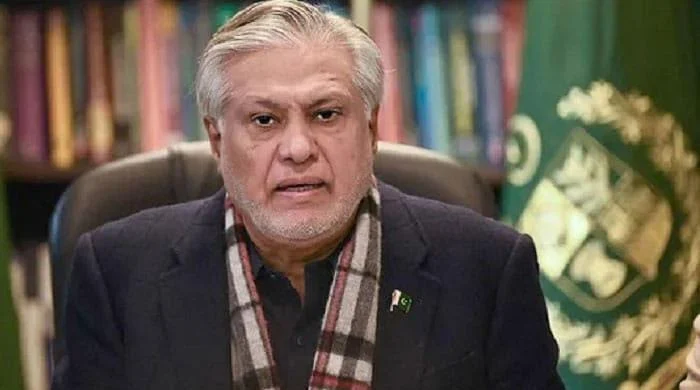
Deputy Prime Minister and Foreign Minister Ishaq Dar expressed optimism on Saturday that a path for talks between Pakistan and India could open following a global diplomatic push aimed at easing rising tensions between the two nuclear-armed neighbors.
Dar’s comments came amid Pakistan’s military response to Indian aggression, which included a military operation named “Bunyan-un-Marsoos,” targeting key Indian military installations.
The operation followed a series of unprovoked Indian attacks on Pakistani territory, with India firing missiles at three Pakistani air bases, including one near Islamabad. Pakistan’s air defenses successfully intercepted most of these missiles.
In response, Pakistan launched its own offensive, targeting multiple Indian military sites in a measured retaliation. Dar emphasized that Pakistan’s actions were defensive and necessary, and called on India to stop its aggressive actions for the sake of peace.
Dar stated in an interview, “India should stop if there’s an iota of sanity. If they stop, so will we. We do not want destruction and waste of funds. You know, both economies are different, but we generally want peace, without the hegemony of any country.” He expressed hope that the diplomatic momentum created by recent international calls for de-escalation would lead to dialogue. “My recent interactions have been very positive, and I believe that the way for talks will be open now,” he added.
This sentiment was echoed by international actors. The US State Department confirmed that Secretary of State Marco Rubio called Pakistan’s Army Chief, Asim Munir, urging both countries to de-escalate and offering US assistance in facilitating talks.
Additionally, the Group of Seven (G7) countries called for maximum restraint and direct dialogue between India and Pakistan. China also expressed deep concern over the situation, offering to play a constructive role in defusing tensions.
Dar’s optimism for peace was tempered by the ongoing hostilities. He asserted that “victory will be ours” after Pakistan launched the military operation in response to India’s aggression. Pakistan, according to Dar, has shot down 80 Indian drones and suffered 35 civilian casualties due to Indian strikes.
He confirmed that India had attacked key Pakistani airbases, including Noor Khan, Shorkot, and Sukkur. However, Dar emphasized that Pakistan’s military actions were not an act of aggression, but rather a defensive response to India’s continuous hostility.
The foreign minister dismissed India’s claims of hitting 15 targets and projecting nuclear superiority, calling India’s narrative false. He pointed out that India’s accusations lacked concrete evidence, particularly following the Pahalgam incident, where India had made unsubstantiated claims of Pakistan’s involvement.
Dar also clarified that Pakistan’s military operation was highly targeted, focusing only on military assets used for attacks on Pakistani territory. “Our operation is precise. The world is watching and understands that we are acting in self-defense,” he said.
Dar also stressed that Pakistan’s military was well-prepared from the outset, and that no risks could be taken given India’s missile and drone strikes.
He reiterated that Pakistan could not remain passive in the face of repeated violations of its sovereignty. He further remarked, “The responsibility is now on the world to make India realise its grave mistake. Our actions are proportionate and within our rights. Victory will be Pakistan’s.”
Planning Minister Ahsan Iqbal also weighed in on the escalating situation, expressing hope that India would choose dialogue over further military escalation. “We would hate to see the nuclear threshold being breached,” he told Reuters, reinforcing the gravity of the situation and the need for diplomatic efforts to prevent further conflict.
