

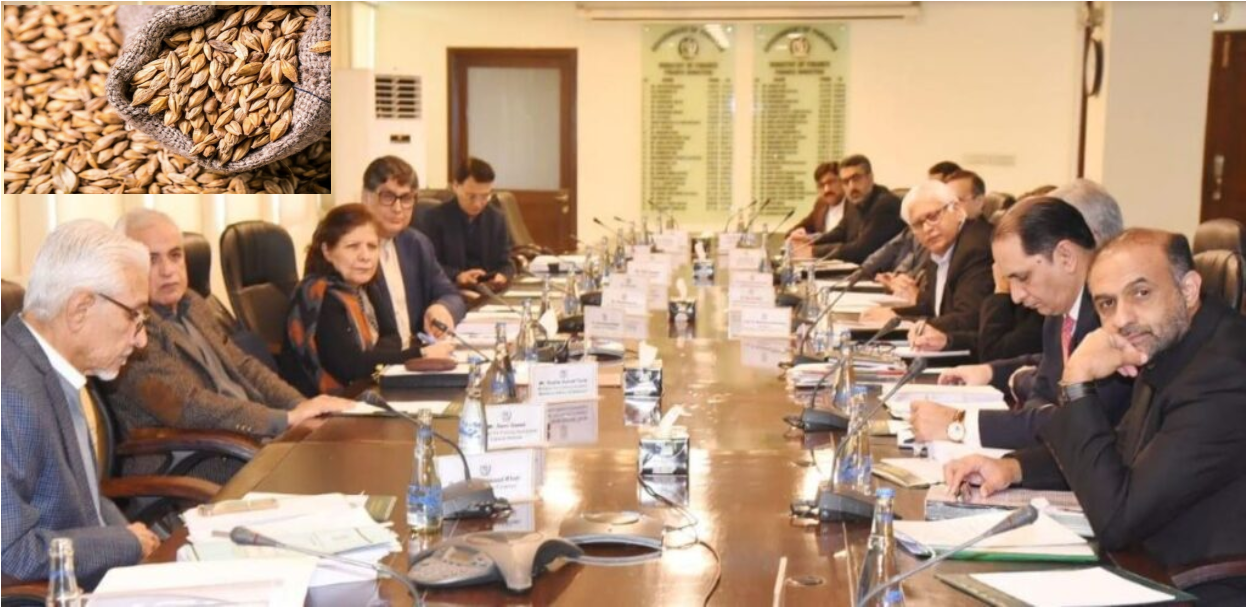

In the midst of ongoing unrest in Gilgit-Baltistan spanning nearly a month due to a surge in wheat prices, the Economic Coordination Committee (ECC) of the Cabinet has agreed to sustain subsidies for the region. This decision involves reducing budgets for certain major ministries, aligning with stringent International Monetary Fund (IMF) conditions on subsidies.
During the meeting, chaired by caretaker Finance Minister Dr. Shamshad Akhtar, approval was granted for the shift from the London Inter-Bank Offer Rate (Libor) to the Secured Overnight Financing Rate (SOFR) in electricity contracts.
The primary focus of the discussions was devising a sustainable plan for the price rationalization of subsidized wheat in Gilgit-Baltistan. Widespread protests erupted in the region after the federal government decreased wheat subsidies, despite a prior understanding with the GB government to gradually raise wheat prices to Rs52 per kg. The abrupt increase to Rs36 per kg from around Rs20 per kg triggered discontent.
Withdrawing the full subsidy would place an additional burden of over Rs10 billion on the GB government, which heavily depends on federal financing. The Ministry of Finance clarified that offering subsidies outside the budget was not feasible due to strict IMF conditions. Therefore, the only viable option was to allocate technical supplementary grants by reallocating funds from ministries with substantial portfolios.
Additionally, the ECC approved a Ministry of Power summary concerning the transition from Libor to SOFR for interest calculation. Libor concluded on June 30 in the international financial market, and SOFR replaced it, following the decision of the UK’s Financial Conduct Authority. The Power Division had contracts with foreign private contractors necessitating the transition, but concerns were raised by Chinese investors. The meeting endorsed the proposal to allow project lenders of independent power producers and independent transmission companies to adopt SOFR as a replacement for USD Libor.
Furthermore, the ECC greenlit various supplementary grants, including Rs38.856 million for the Institutional Reforms Cell from the Cabinet Division and Rs1.59 billion for the Ministry of Finance. The latter is allocated for the rehabilitation of flood-damaged rural roads in Khyber Pakhtunkhwa and the provision of clean drinking water in specific areas of Lahore, both funded through the counter value fund deposited under Japanese grant aid.
