

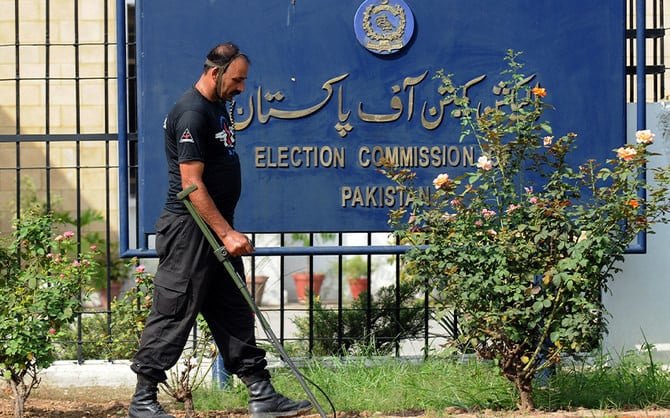

The Election Commission of Pakistan (ECP) has called an emergency meeting to address the worsening law and order conditions, particularly in Balochistan and Khyber Pakhtunkhwa (KP). The meeting is scheduled for Thursday, February 1, at 3:00 pm.
The ECP has extended invitations to high-ranking officials from Balochistan and KP, including caretaker interior ministers, home secretaries, chief secretaries, and the Inspector General of Police (IGPs). Additionally, officials from intelligence agencies have been invited to participate in the emergency meeting.
In response to a specific incident, the ECP has decided to postpone elections in Khyber Pakhtunkhwa’s National Assembly’s NA-8 and Khyber Pakhtunkhwa’s PK-22 constituencies. This decision follows the tragic killing of Rehan Zeb Khan, a candidate affiliated with the Pakistan Tehreek-e-Insaf (PTI) party. Khan was shot dead in KP’s Bajaur district while on an election campaign.
The situation underscores the challenges and security risks associated with the electoral process in certain regions of Pakistan, leading to precautionary measures and a reevaluation of the election timeline in affected constituencies. The involvement of high-ranking officials and intelligence agencies in the emergency meeting suggests a coordinated effort to address and mitigate the security concerns ahead of the elections.
The postponement comes in the wake of broader security challenges, with several political parties, including the Pakistan Peoples Party (PPP), Pakistan Tehreek-e-Insaf (PTI), National Party (NP), and Jamiat Ulema-e-Islam-Fazl (JUI-F), facing targeted attacks during their election rallies.
In addition to the postponement of elections in specific constituencies, the ECP has called for an emergency session to discuss the impacts of the recent wave of violent incidents in Khyber Pakhtunkhwa and Balochistan. The session, scheduled for 3:00 pm on the following day, will be attended by key officials, including the interior minister, secretary interior, chief secretaries of the concerned provinces, inspector generals (IGs), and representatives from intelligence agencies.
The summoning of this emergency session suggests a concerted effort by the electoral authorities and relevant government bodies to address and mitigate the security challenges in order to ensure the safety of voters, candidates, and the overall electoral process. The security concerns have prompted politicians to voice their anxieties, and some have even called for a delay in the already postponed elections. The situation remains fluid, and further developments will likely shape the electoral landscape in the coming days.
