

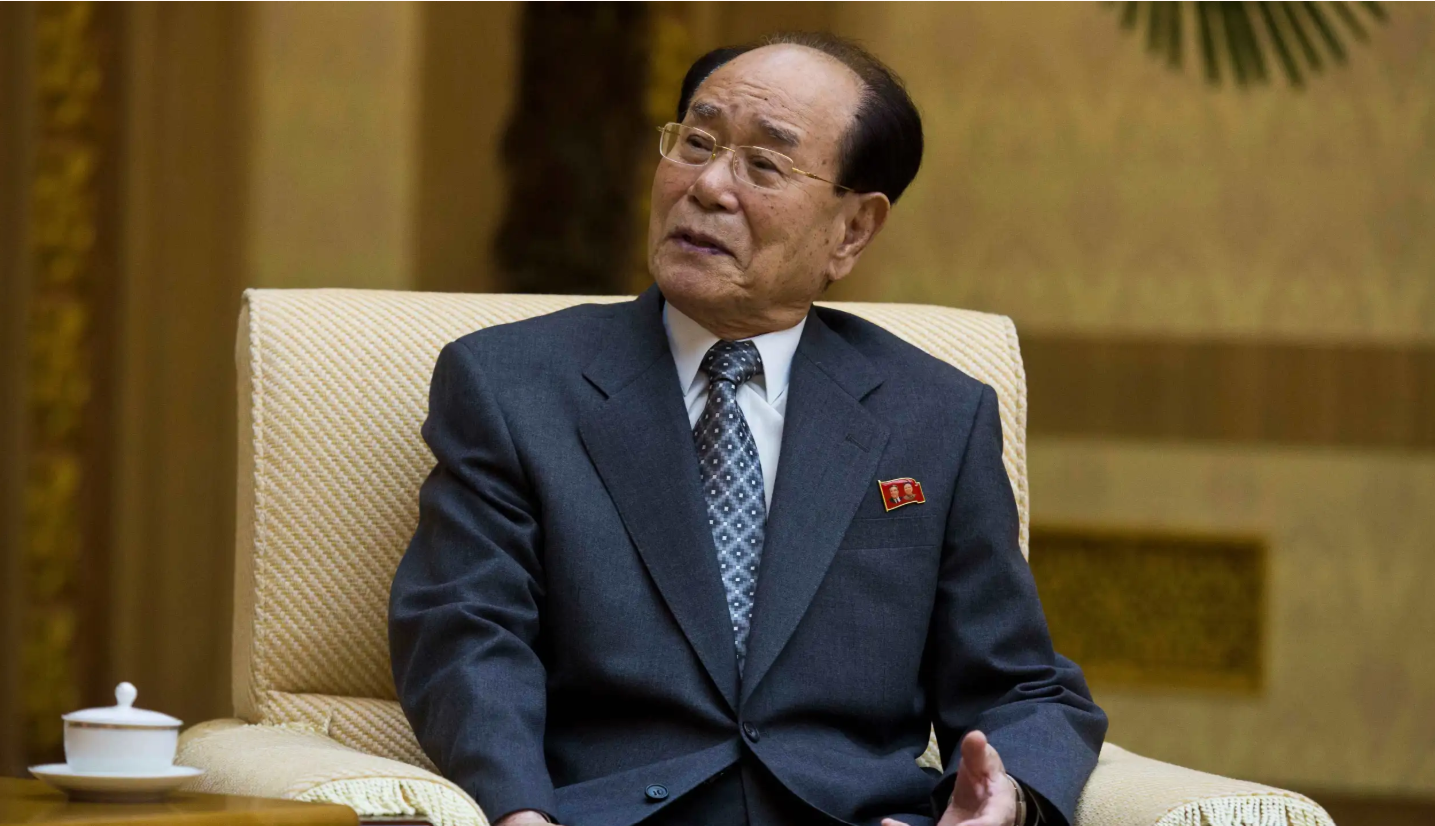

North Korea’s longtime statesman and former head of state, Kim Yong Nam, has died at the age of 97. He was one of the country’s most prominent political figures, known for his unwavering loyalty to the Kim family and his decades-long service in the country’s leadership.
According to official announcements, Kim Yong Nam passed away on Monday due to multiple organ failure linked to cancer. His death marks the end of a long political career that spanned more than six decades and included key roles in diplomacy and governance.
A Lifelong Loyalist to the Kim Dynasty
Kim Yong Nam was a central figure in North Korean politics and diplomacy. His loyalty to the ruling Kim dynasty ensured his survival through political transitions and internal purges. For more than twenty years, he served as the head of the Supreme People’s Assembly, effectively acting as the nation’s ceremonial head of state.
Despite holding a position that symbolized authority, true power always rested with the ruling Kim family. Kim Yong Nam worked under Kim Jong Il and later Kim Jong Un, faithfully representing their policies both at home and abroad. His deep, commanding voice and carefully crafted speeches became a hallmark of national ceremonies and state events.
Diplomatic Presence and Political Influence
As a skilled diplomat, Kim Yong Nam represented North Korea on numerous international occasions. He frequently greeted foreign dignitaries and often appeared in official state meetings. In February 2018, he led a North Korean delegation to South Korea for the Pyeongchang Winter Olympics, where he was accompanied by Kim Yo Jong, the sister of Kim Jong Un.
The visit marked a rare moment of diplomacy between the two Koreas. Kim Yong Nam’s presence at the games, where he sat near then–US Vice President Mike Pence, highlighted North Korea’s temporary shift toward dialogue and engagement during that period.
Role in Political Transitions
Following the death of North Korea’s founding leader Kim Il Sung in 1994, Kim Yong Nam played a key role in the state’s transition of power. He read the official elegy during the mourning period and later nominated Kim Jong Il to lead the National Defence Commission. His steady role during times of political change helped project stability within the regime.
Kim Yong Nam remained at the forefront of North Korean politics until 2019, when he stepped down as head of the parliament and was succeeded by Choe Ryong Hae, a close confidant of Kim Jong Un. His influence gradually declined in his later years, largely due to his age.
Legacy of a Political Survivor
Born in Pyongyang, Kim Yong Nam studied at Kim Il Sung University and later attended Moscow State University. His education abroad, combined with his loyalty to the regime, allowed him to build a reputation as one of North Korea’s most disciplined and reliable figures.
For decades, he served as the public face of North Korea’s government, maintaining the image of unity and strength demanded by the leadership. His career reflected both the rigidity and continuity of North Korean politics.
National Mourning and Farewell
North Korean leader Kim Jong Un visited the bier of Kim Yong Nam to pay respects and express condolences. The funeral has been scheduled for Thursday, marking the official farewell to a man often regarded as a pillar of the North Korean state.
Kim Yong Nam’s death closes a significant chapter in the country’s political history. His decades of service and loyalty symbolize the enduring power structure of North Korea, where political survival often depends on absolute allegiance to the ruling family.
