

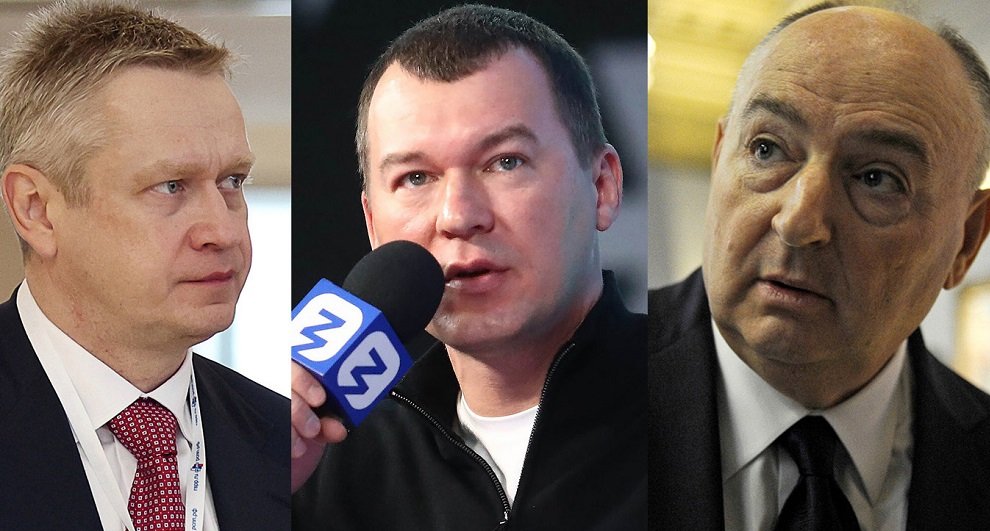

The European Union has agreed to lift sanctions on Russian individuals after Hungary threatened to block the renewal of penalties against over 2,400 Russian and Belarusian citizens sanctioned over the war in Ukraine.
EU sanctions, which require unanimous renewal every six months, were set to expire on March 15. Hungary, maintaining closer ties with the Kremlin than most EU nations, argued that extending sanctions would hinder peace negotiations and demanded the removal of eight individuals, including Mikhail Fridman, Alisher Usmanov, and Petr Aven.
Who Are the Delisted Individuals?
Gulbakhor Ismailova
The sister of billionaire Alisher Usmanov, Ismailova was accused of benefiting from her brother’s wealth through a network of shell companies. German authorities identified her as the sole beneficiary of Usmanov’s trust, leading to her placement on the EU sanctions list. She lost her Cypriot citizenship in 2022 as part of a crackdown on Cyprus’ controversial cash-for-passports scheme.
Viatcheslav Moshe Kantor
A fertilizer tycoon with an estimated net worth of $9.5 billion, Kantor served as president of the World Jewish Congress until stepping down in 2022 after being sanctioned. He challenged the sanctions in multiple courts, arguing that the evidence—such as a Wikipedia article—was insufficient to prove Kremlin ties. His most recent case was dismissed in January 2025.
Mikhail Degtyarev
Russia’s Sports Minister and head of the Russian Olympic Committee, Degtyarev was first sanctioned in 2014 for supporting the Donetsk People’s Republic. He later became governor of the Khabarovsk region following protests over the politically charged imprisonment of his predecessor. Unlike his predecessor, Degtyarev struggled to gain public support.
Vladimir Rashevsky
Rashevsky, a former coal and fertilizer magnate, successfully challenged his EU sanctions in court in 2024. He had been sanctioned for attending a meeting with President Vladimir Putin on the day of Russia’s full-scale invasion of Ukraine. The EU General Court ruled that the evidence against him was insufficient, prompting some European countries—outside of Hungary—to push for his removal from the sanctions list.
