

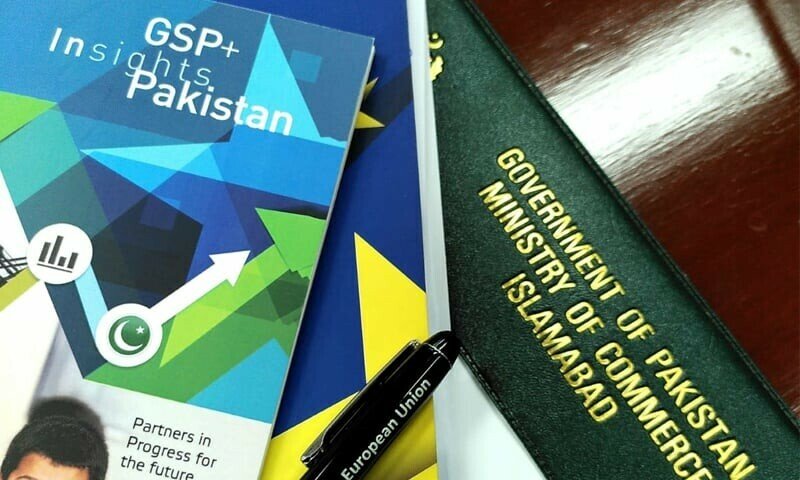

The fourth GSP report from the European Union (EU) recognizes Pakistan’s substantial legislative progress while underscoring the need for improved practical application in both “letter and spirit.”
EU Ambassador to Pakistan, Riina Kionka, stated that the GSP+ incentive has positively impacted Pakistani society, emphasizing its role in fostering awareness of human rights, labor rights, environmental standards, and good governance.
Kionka noted that while progress has been made, the full potential of GSP+ benefits can be realized by diversifying Pakistan’s exports to include more value-added products.
The joint report by the European Commission and the EEAS evaluated the progress of eight GSP+ beneficiary countries, including Pakistan, in implementing the 27 international core conventions essential for maintaining GSP+ status. These conventions span human rights, labor rights, environmental standards, and good governance for the period 2020 to 2022.
The GSP+ status, awarded to Pakistan in 2014, provides zero-rated or preferential tariffs on nearly 66% of tariff lines, enhancing the country’s export capabilities to the EU market. Over the period from 2014 to 2022, Pakistan witnessed a 108% increase in exports to the EU, with imports from the EU rising by 65%, resulting in a total trade volume increase from €8.3 billion in 2013 to €14.85 billion.
The report highlighted areas requiring further progress and suggested that the GSP+ benefit could be maximized by expanding exports to include higher-value products. The EU envoy acknowledged the role of various stakeholders, including Pakistani authorities, civil society, trade unions, business organizations, and international bodies, in contributing to the dialogue and information-sharing during the monitoring periods.
Caretaker Commerce Minister Gohar Ejaz recently announced that the European Parliament members have decided to extend the GSP+ rules, pending final approval by the European Council. This decision reinforces the EU’s commitment to the GSP+ arrangement, which aims to promote good governance and sustainable development through trade facilitation.
