

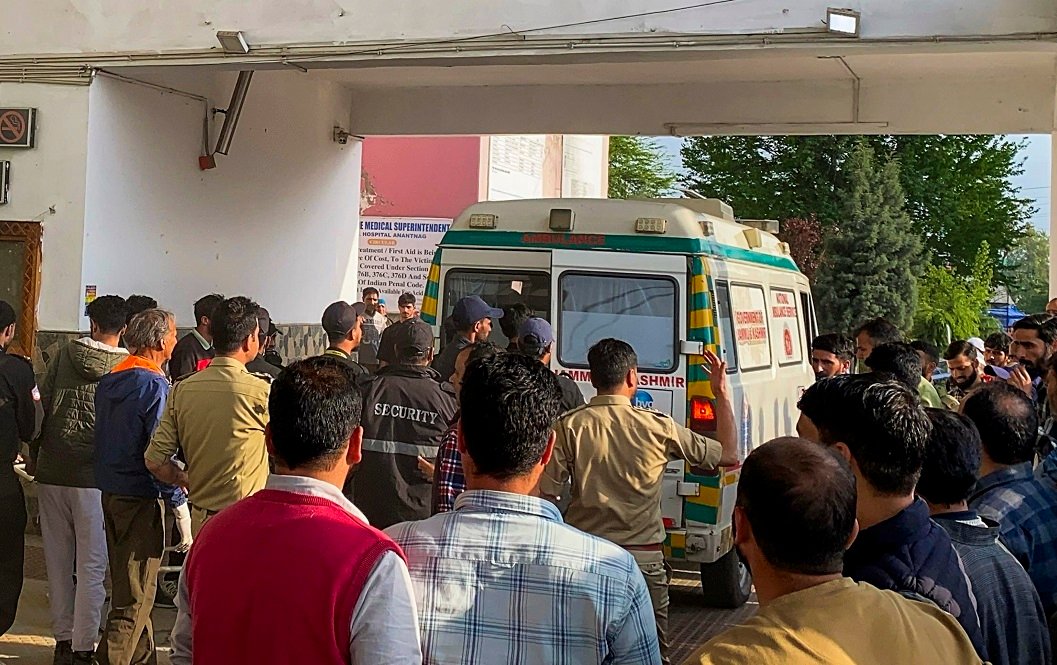

Amarjeet Singh Daulat, former chief of India’s Research and Analysis Wing (RAW), has admitted that the April 22 attack in Pahalgam—located in Indian Illegally Occupied Jammu and Kashmir (IIOJK)—was the result of failures within India’s own security and intelligence apparatus. The attack claimed 26 lives and has further strained relations between India and Pakistan.
Speaking to the BBC, Daulat acknowledged the security lapse, saying, “Whatever happened in Pahalgam was due to a failure of security agencies because there was no security in place.” He emphasized that intelligence gathering in Kashmir heavily depends on local cooperation, stressing, “Any important information will come from the Kashmiris themselves. It is therefore very important to keep the Kashmiris on our side.”
Daulat dismissed placing blame solely on Kashmiri communities, stating that while some local elements might have been involved, the core interference likely came from across the border.
Amid heightened diplomatic tensions, India has blamed Pakistan for orchestrating the attack, responding with punitive measures including the suspension of the Indus Waters Treaty, the expulsion of Pakistani diplomats, and the sealing of borders. Pakistan, in turn, has denied the accusations, suspended the Simla Agreement, cut trade ties, and closed its airspace. Skirmishes along the Line of Control have also been reported.
Daulat warned against further escalation, particularly full-scale conflict. “War is the last bad option,” he said, advising caution against rhetoric that could lead to a nuclear confrontation. While he acknowledged that limited military responses such as surgical strikes could be justified—citing the 2019 Balakot strike as an example—he warned that talk of war only serves to intimidate and destabilize.
He also suggested that any claims regarding Pakistan’s involvement should be substantiated with evidence to bolster India’s position internationally. “Yes, if that’s done, it would be good,” he said, referring to presenting proof on global platforms.
Despite current hostilities, Daulat highlighted backchannel diplomacy as a viable path forward. Referring to former U.S. President Donald Trump’s remarks on the India-Pakistan conflict, he said, “There are ways to manage the situation. Backchannel diplomacy is one of them.”
