

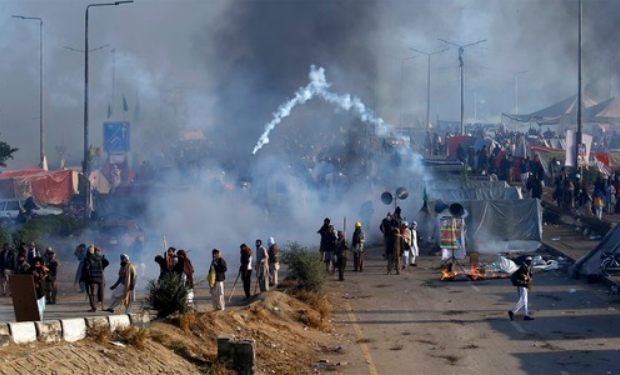

The inaugural session of the Faizabad sit-in commission was held on Monday, chaired by former Inspector General of Police Akhtar Ali Shah in Islamabad.
During the meeting, it was decided to request video records from the Pakistan Electronic Media Regulatory Authority pertaining to the 2017 sit-in.
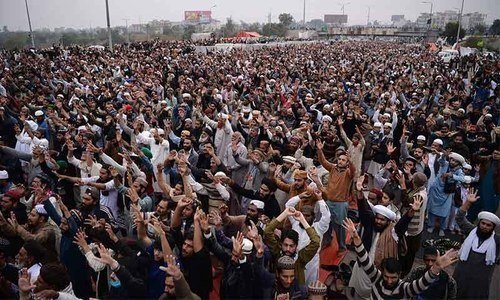
The commission, established to investigate the Tehreek-e-Labbaik Pakistan’s (TLP) protest in 2017, initiated the process of gathering all relevant documents and inquiry reports related to the Faizabad sit-in. Despite one commissioner, Tahir Alam, being absent due to his mother’s illness, the commission commenced its work. The next meeting is set to summon pertinent administrative officials.
The federal government had previously informed the Supreme Court of the formation of a fact-finding committee to probe the Faizabad sit-in.
Chief Justice Qazi Faez Isa took up the case after it had been in limbo, with various petitioners, including the Ministry of Defence, the Election Commission of Pakistan, and the Intelligence Bureau expressing their intent to withdraw their review petition.
US Announces $4 Million For Capacity Building Of Police And Anti-Terrorism Force In Balochistan: Blome
Meanwhile, Quetta – Today in Quetta, U.S. Ambassador to Pakistan Donald A. Blome unveiled four important initiatives to bolster the capabilities of Pakistani law enforcement in their efforts to safeguard local communities.
- Anti-Terrorist Force Training Facility Expansion: A $4 million assistance package will facilitate the expansion of Balochistan Police’s Anti-Terrorist Force training facility, doubling its current capacity, and allowing simultaneous instruction for an additional 800 trainees.
- Upgraded Police Stations: The United States allocated $2 million to repair and upgrade 10 flood-damaged police stations. These facilities will include modern infrastructure, such as digital record management and support for alternative dispute resolution mechanisms, thereby supporting more responsive service to local communities. The facilities will also feature dedicated gender desks that will provide a private space for vulnerable populations to report crimes and receive special care for problems or injuries resulting from those crimes.
