

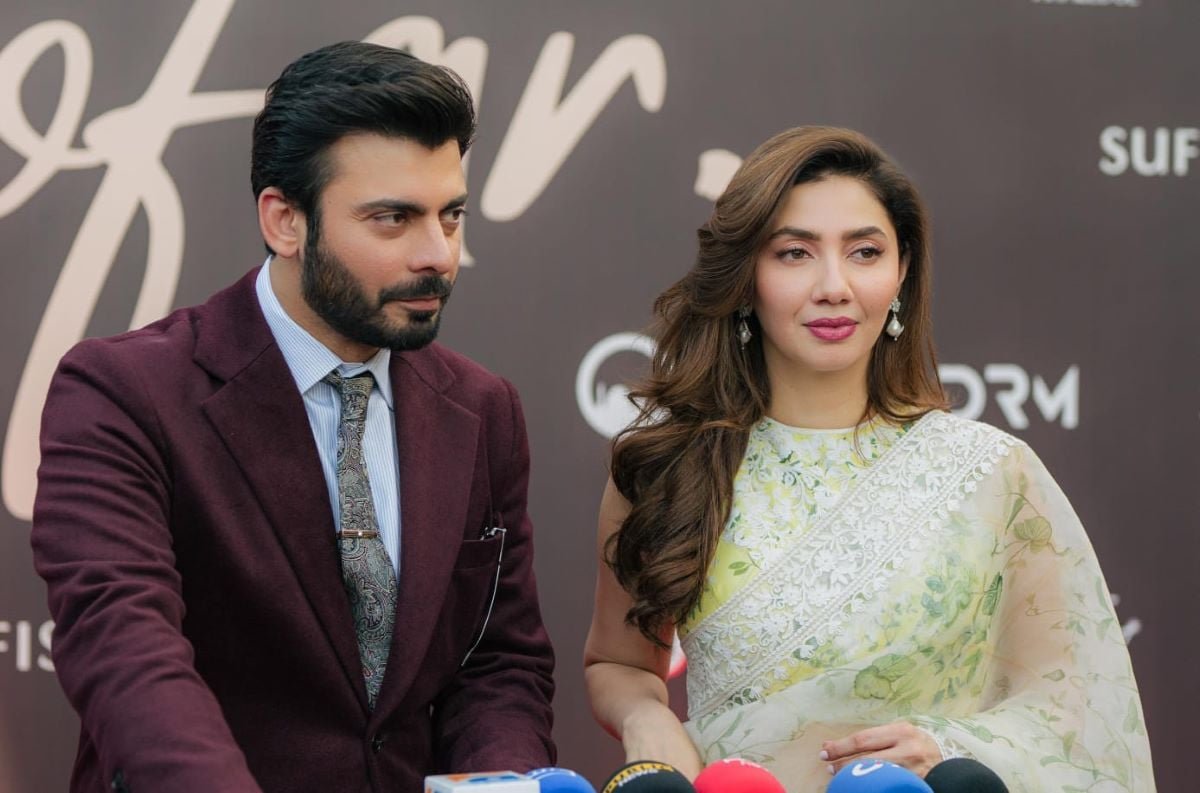

Actors Fawad Khan and Mahira Khan have reunited on screen for their new film Neelofar, their first major collaboration since the acclaimed series Humsafar. The film, distributed by Film Master Media Distribution, is slated for release over the UAE National Day weekend, a strategic choice aimed at maximizing audience turnout during a holiday period.
Fawad, who also produced the film, revealed that the project faced years of delays due to the COVID-19 pandemic and other unforeseen challenges. “Had it not been for COVID or a few circumstances, this film may have been released earlier,” he said, describing the production process as “challenging” and emotionally taxing.
Mahira admitted that she occasionally wondered if their well-known on-screen chemistry would still translate after years apart. “There were moments I’d ask him, ‘Do we still have it?’” she confessed. Fawad, however, expressed confidence in their collaboration, noting, “If you enjoy performing together, someone out there will feel it too.”
In Neelofar, Mahira plays a visually impaired woman, which required both actors to approach the portrayal of romance differently. “Looking into each other’s eyes is the easiest way to convey love on screen,” Mahira said. “But here, she can’t see him.” Fawad added that much of the performance challenge fell on her: “She has to express without eye contact.”
Although Fawad produced the film, it carries Mahira’s character’s name, a gesture he explained as appropriate since the story revolves around her journey. Mahira described the choice as “generous,” noting that many actor-producers often title films after their own roles.
Beyond its central romance, the film incorporates subtle social commentary. Fawad described these elements as “relevant to the times” without being overt or preachy.
The reunion of Fawad and Mahira has generated significant excitement among fans, underscoring that timeless love stories continue to resonate. “In a time when relationships struggle, perhaps there is even more need to fight for love,” Fawad said, highlighting the film’s enduring appeal in exploring emotional connections against modern challenges.
