

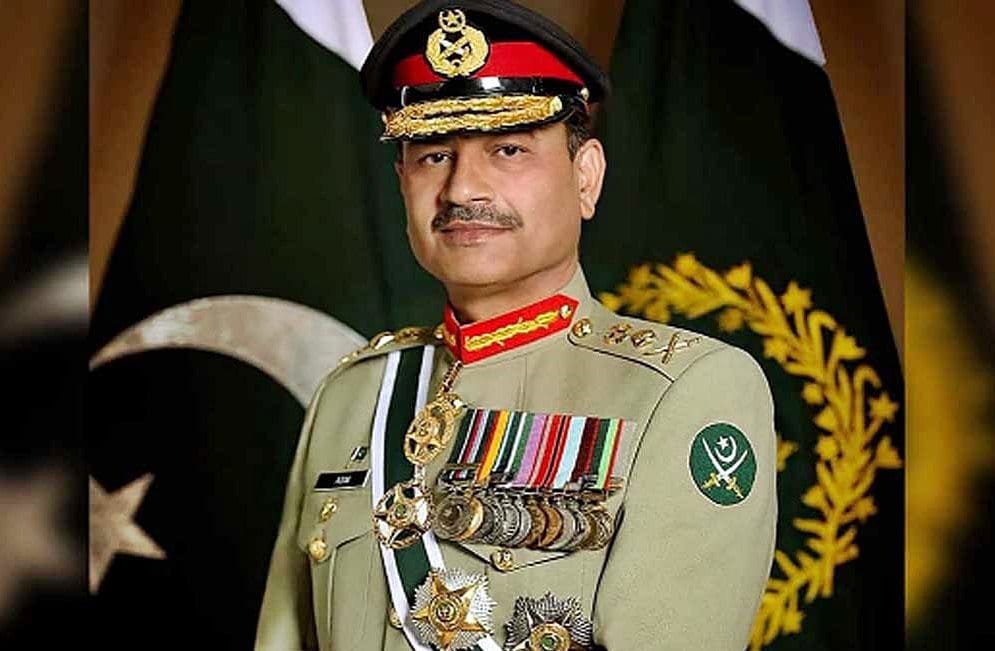

Field Marshal Syed Asim Munir, Pakistan’s Chief of Army Staff, has issued a stern warning to the Afghan Taliban, urging them to control militant proxies operating from Afghan soil against Pakistan. Speaking at the 152nd PMA Long Course Passing Out Parade at the Pakistan Military Academy in Kakul, he vowed that every state-backed proxy targeting Pakistan would be “reduced to dust.”
The Field Marshal’s remarks came amid rising security tensions between Pakistan and Afghanistan. He stated that elements using Afghan territory to attack Pakistan would face a firm and decisive response from the armed forces.
“No Space for War in a Nuclearised Environment”
Addressing the newly commissioned cadets, Field Marshal Munir emphasized that there is no room for war in a nuclearized South Asia. He urged regional powers, especially India, to resolve all disputes through dialogue, mutual respect, and adherence to international norms.
“Having failed in its belligerence against Pakistan in Operation Marka-e-Haq, India continues to pursue state-sponsored terrorism as a preferred policy,” he said. “Our adversary’s use of proxies like ‘Fitnaul Hind’ and ‘Fitnaul Khawarij’ exposes its duplicity and malicious designs.”
His comments underscored Pakistan’s long-standing stance that peace and security in the region depend on responsible state behavior and the cessation of cross-border terrorism.
Appeal to the Afghan People for Peace and Progress
In a significant message directed toward Afghanistan, Field Marshal Munir called on the Afghan people to prioritize peace and prosperity over continued violence. He urged the Taliban government to dismantle terror networks operating from its territory and to prevent its soil from being used against Pakistan.
“The people of Afghanistan must choose mutual security over perpetual violence,” he said. “Progress and development are only possible through stability and cooperation.”
This statement reflects Pakistan’s growing frustration with repeated cross-border attacks by militant groups based in Afghanistan, despite multiple diplomatic and security engagements between the two nations.
Pakistan’s Commitment to Defeating Terrorism
Field Marshal Munir reaffirmed Pakistan’s commitment to eradicating terrorism and ensuring the safety of its citizens. He assured that the Pakistan Army, in coordination with law enforcement agencies and the people, especially in Khyber Pakhtunkhwa and Balochistan, would continue to fight the menace with determination.
“Be assured that, like our victory in the conventional domain, every state proxy of our neighbor will be reduced to dust, Inshallah,” he declared, receiving a strong response from the audience.
His statement serves as both a warning to external actors and a reassurance to the Pakistani nation that the military remains fully capable of defending its sovereignty and territorial integrity.
Strengthening National Unity and Resilience
The Army Chief also praised the resilience of the Pakistani people and the sacrifices made by soldiers in combating terrorism. He highlighted the importance of unity and national resolve in confronting hybrid warfare and external interference.
“The strength of Pakistan lies in the bond between its armed forces and its people,” he noted. “Together, we have overcome immense challenges and will continue to do so with faith and fortitude.”
Regional Context and Strategic Outlook
Field Marshal Munir’s remarks come at a critical time, as Pakistan faces heightened border insecurity and strained relations with Afghanistan. The statement also follows renewed attacks in border regions, raising concerns about cross-border militancy and regional instability.
By directly addressing the Taliban government, the Army Chief signaled Pakistan’s readiness to confront threats both diplomatically and militarily if necessary. His speech at Kakul reinforced Pakistan’s strategic position—seeking peace but remaining prepared for decisive action when provoked.
As Islamabad and Kabul continue their uneasy engagement, the message from Kakul stands clear: Pakistan will not tolerate the use of neighboring territories for acts of terrorism.
