

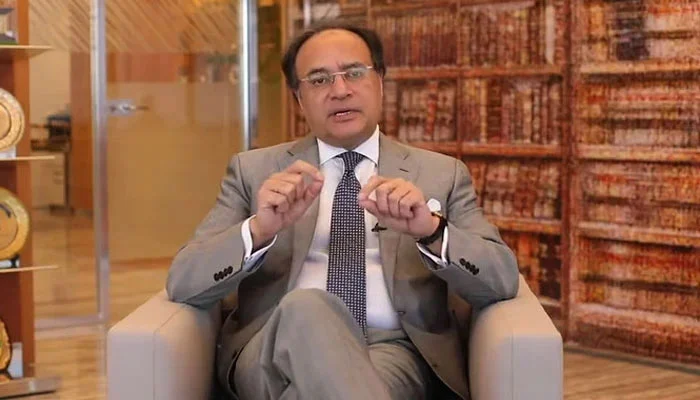

Finance Minister Muhammad Aurangzeb revealed plans to ease the financial strain on the salaried class in the upcoming budget, following recent protests by government employees in Islamabad, who called for pension reforms to be rolled back and for increases in pay and allowances.
Speaking to journalists in Lahore, Aurangzeb highlighted several positive economic indicators, including a rise in remittance senders to 35 million and increased inflows into the Roshan Digital Account. He also emphasized the critical role of the private sector in driving Pakistan’s economic growth, noting that foreign exchange reserves are steadily increasing.
The minister also pledged ongoing support for the construction industry while ensuring that real estate does not become a venue for speculative activities.
Earlier, Aurangzeb commented on the government’s efforts to broaden the tax base, which, he said, has helped reduce the financial burden on the national treasury. Speaking in Faisalabad, he stressed that Pakistan’s economy is on a path to improvement, largely due to significant reforms.
He highlighted how lower policy rates have benefited business owners and emphasized that measures to stabilize the economy are already showing positive outcomes. Inflation has decreased to single digits, offering much-needed relief to the public.
Aurangzeb also pointed to recent tax reforms that have led to a substantial increase in revenue collection. Addressing concerns over the need for support from the International Monetary Fund (IMF), he stressed that sustainable governance cannot rely on external assistance and requires a robust economic framework.
The finance minister concluded by underscoring the importance of public-private sector collaboration, stating that working together is essential for ensuring long-term economic progress.
