

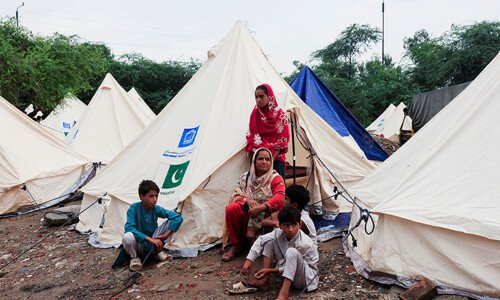

As monsoon floods devastate large swathes of eastern Pakistan, tens of thousands of women now find themselves stranded in overcrowded and under-resourced relief camps, struggling for access to the most basic necessities. In places like Chung, a flood-affected settlement on the outskirts of Lahore, women are facing a secondary crisis—one of neglected healthcare, unhygienic conditions, and limited privacy.
Once a functioning school, a building now serves as a makeshift camp for over 2,000 displaced people. Inside its classrooms, women sit on muddy floors in worn-out clothes, many of them pregnant or nursing infants, their health deteriorating as access to sanitary pads, clean bathrooms, and essential medicines remains scarce.
Pregnancy in Crisis: Pain, Uncertainty, and No Medical Relief
Nineteen-year-old Shumaila Riaz, seven months pregnant, has spent days in the camp enduring painful cramps without medical attention. “I wanted to think about the child I’m going to have,” she said, “but now, I am not even certain about my own future.”
Another young woman, Fatima (name changed), four months pregnant and mother to a one-year-old, shares a similar fate. “I used to eat, sleep, and walk freely. That is all gone now,” she said, as she tried to soothe her child in a stifling tent held together by thin wooden sticks.
Doctors at a nearby NGO-run mobile clinic report treating up to 300 patients a day—many suffering from infections, trauma, and water-borne diseases. “A large number of women are showing signs of psychological distress after losing everything,” said Fahad Abbas, a 27-year-old physician at the camp.
Menstruation, Silence, and Struggles for Dignity
For menstruating women, the ordeal is compounded by cultural taboos and lack of sanitary products. “We are struggling to get pads,” said Aleema Bibi, 35. “And even if we do, there are no proper bathrooms to use.” Many are forced to seek shelter in nearby homes or use open fields under cover of darkness, often waiting for male residents to leave so they can use the toilet in peace.
The lack of privacy and hygiene has exposed many women to infections, while psychological trauma deepens among those already vulnerable. One woman, holding her baby on a mud-stained sheet, summed up the sentiment: “We escaped death, but this misery is no less than death either.”
According to WHO, even without disaster conditions, Pakistan sees 675 newborn deaths daily and 27 maternal deaths due to preventable complications. In the current crisis, those numbers are expected to rise unless immediate aid is directed toward women’s health and hygiene.
