

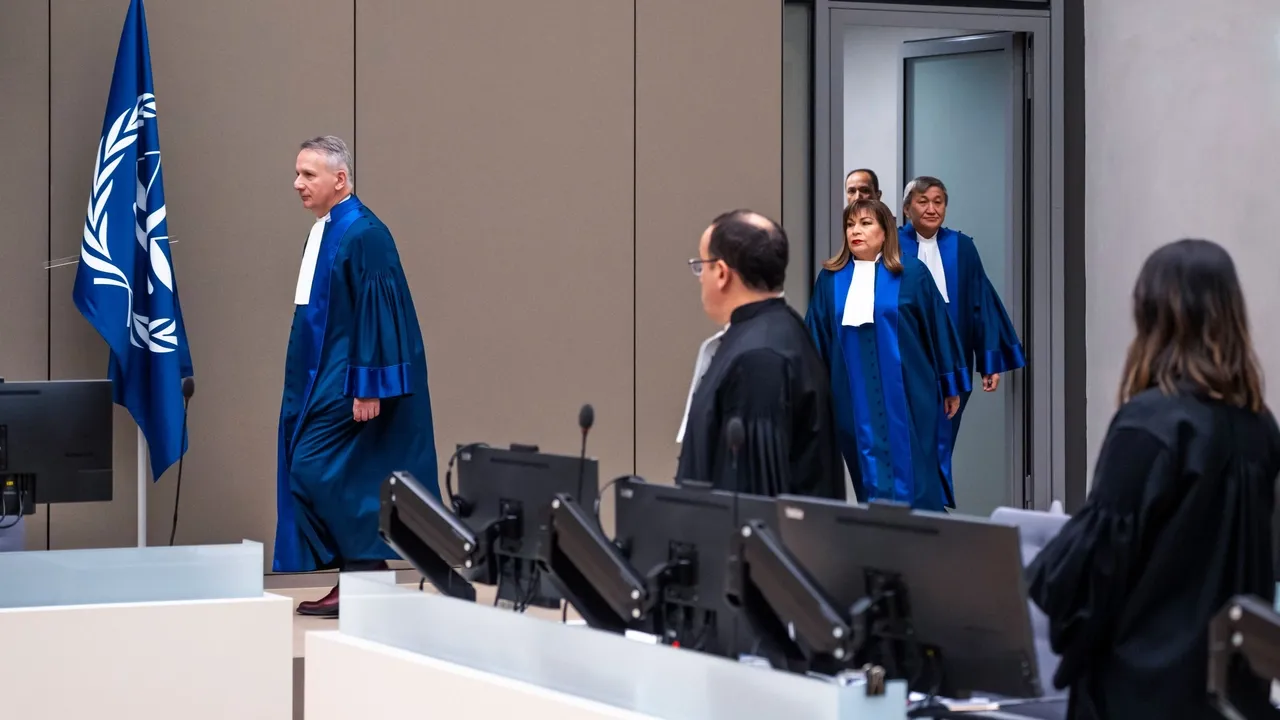

The International Criminal Court (ICC) on Thursday strongly rejected newly announced US sanctions on two of its judges, describing the move as a “flagrant attack” on the independence of an impartial judicial institution.
In a sharply worded statement, the court criticised Washington’s decision to sanction Judge Gocha Lordkipanidze of Georgia and Judge Erdenebalsuren Damdin of Mongolia. The ICC said the sanctions directly undermine its mandate and threaten the foundations of international justice.
“These sanctions are a flagrant attack against the independence of an impartial judicial institution which operates pursuant to the mandate conferred by its States Parties from across regions,” the court said.
Warning Over Threats to Rule of Law
The ICC warned that targeting judicial officials for carrying out their legal duties places the broader international legal order at risk. It stressed that judges and prosecutors must be able to apply the law without fear of political retaliation.
“When judicial actors are threatened for applying the law, it is the international legal order itself that is placed at risk,” the statement said. The court added that measures aimed at judges elected by ICC member states “undermine the rule of law.”
The ICC reiterated that it stands firmly behind its judges, prosecutors, and staff, as well as victims of “unimaginable atrocities” who seek justice through the court.
US Justifies Sanctions Over Israel Case
Earlier on Thursday, US Secretary of State Marco Rubio announced sanctions on the two judges, accusing them of being “directly engaged” in what he described as the “illegitimate targeting of Israel.”
Rubio said the sanctioned judges played a role in ICC actions against Israeli officials, including authorising arrest warrants and supporting rulings related to the court’s jurisdiction. He argued that these steps were taken without Israel’s consent and reflected what he called “politicised actions targeting Israel.”
“These individuals have directly engaged in efforts by the ICC to investigate, arrest, detain, or prosecute Israeli nationals,” Rubio said, citing their role in a December 15 ruling that rejected Israel’s appeal.
Background to the Arrest Warrants
The US sanctions follow a decision earlier this week by the ICC’s appeals chamber, which dismissed Israel’s attempt to invalidate arrest warrants issued for Israeli Prime Minister Benjamin Netanyahu and former Defence Minister Yoav Gallant.
The warrants accuse both officials of war crimes and crimes against humanity in connection with Israel’s military campaign in Gaza. Israel has rejected the court’s jurisdiction and denies the allegations.
In its ruling, ICC judges said the investigation into alleged crimes committed in Gaza after October 7, 2023, fell under a notification issued to Israel in 2021 and did not require a new notice under the Rome Statute.
Growing Tensions Between ICC and Washington
The sanctions highlight deepening tensions between the United States and the ICC, which Washington does not recognise as having jurisdiction over its nationals or those of its allies.
The ICC, however, said on Thursday that political pressure would not deter it from fulfilling its mandate, insisting that accountability under international law remains essential regardless of the individuals or states involved.
