


Water Terrorism
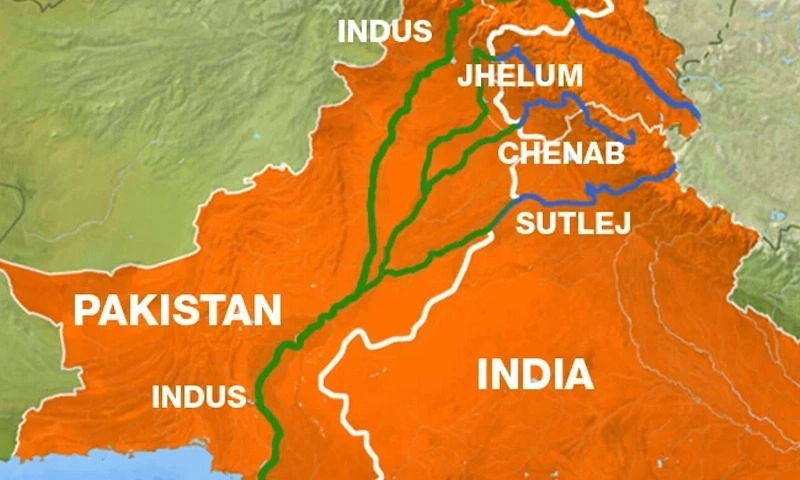
India has significantly reduced the flow of water from the Baglihar Dam on the Chenab River to Pakistan, a move that has raised serious concerns over a looming water crisis in regions such as Punjab and Azad Jammu and Kashmir.
The reduction in water flow comes in the wake of India’s suspension of the Indus Waters Treaty (IWT), intensifying tensions between the two nuclear-armed neighbors.
According to officials from Pakistan’s Irrigation Department, the water inflow at Head Marala has dropped drastically from 87,000 cusecs to just 10,800 cusecs within a span of 24 hours. This abrupt and steep decline is alarming for agricultural and domestic water users downstream. The shortage could severely impact irrigation systems as well as the availability of drinking water in areas that are already under strain.
In addition to the cut in Chenab water, Indian media reports have indicated that India is also preparing to halt the release of water from the Kishanganga Dam located in the Gurez Valley. This dam is a crucial tributary of the Jhelum River, and any interruption in its flow could worsen the already precarious water situation in northern Pakistan.
The timing of these developments suggests a coordinated strategy by New Delhi, especially as they follow a string of controversial decisions, including the expulsion of Pakistani diplomats, cancellation of visas, and the abandonment of its obligations under the 1960 Indus Waters Treaty.
These moves come after a deadly attack on Indian tourists in Pahalgam on April 22. India has blamed the incident on militant groups allegedly operating from Pakistani territory, a claim strongly denied by Islamabad. In response to the Indian actions, Pakistan’s National Security Committee (NSC) has labeled the water curbs as “water terrorism.”
In a strongly worded statement issued after an emergency session chaired by Prime Minister Shehbaz Sharif, the NSC warned that any deliberate effort to withhold Pakistan’s legal share of river water would be viewed as an act of war.
The committee also decided to reduce India’s diplomatic footprint in Islamabad, limiting its personnel to 30 officials. Furthermore, Pakistan plans to take the matter to the United Nations and other international bodies to highlight what it calls blatant violations of international agreements and norms.
India, on the other hand, has defended its stance. A senior Indian official stated that since the country had placed the IWT in abeyance, it was within its rights to prioritize domestic water needs. He mentioned that ongoing maintenance at the Kishanganga Dam would necessitate a complete halt in downstream water flow, although no exact timeframe was provided.
The suspension of the Indus Waters Treaty represents a serious rupture in one of South Asia’s most enduring diplomatic arrangements. Brokered by the World Bank in 1960, the treaty allocated the waters of the Indus, Jhelum, and Chenab to Pakistan, while India received control of the Ravi, Sutlej, and Beas rivers. Its suspension marks an unprecedented shift in bilateral relations and casts uncertainty over regional water security.
Environmental experts have warned of far-reaching consequences. Dr. Saima Qureshi, a researcher at the Pakistan Council of Research in Water Resources, noted that millions of people, especially farmers in Punjab, depend heavily on water from the Chenab and Jhelum rivers for irrigation. A prolonged cutoff could devastate crops and livelihoods, potentially triggering a humanitarian crisis if the situation is not addressed through diplomatic means.
