

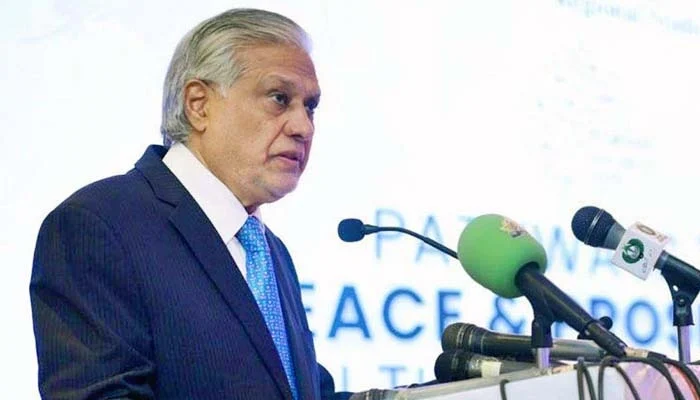

A Landmark Diplomatic Step
Deputy Prime Minister and Foreign Minister Ishaq Dar arrived in Dhaka on Saturday for a two-day official visit, marking the first time in 13 years that a Pakistani foreign minister has traveled to Bangladesh. His visit, scheduled for August 23–24, reflects a renewed momentum in bilateral ties after years of strained relations.
The visit comes at the invitation of the Bangladeshi government and signals a diplomatic breakthrough following the political changes in Bangladesh last year, when Sheikh Hasina’s government was ousted through a popular movement. Since then, Islamabad and Dhaka have sought to expand cooperation, with trade and political dialogue showing significant improvement.
Reception and Scheduled Meetings
Dar was welcomed in Dhaka by senior Bangladeshi officials, including Foreign Secretary Ambassador Asad Alam Siam, Pakistan’s High Commissioner Imran Haider, and Bangladesh’s High Commissioner to Pakistan Muhammad Iqbal Khan.
During the visit, Dar is expected to meet Bangladesh’s Chief Adviser Professor Muhammad Yunus, Adviser for Foreign Affairs Md Touhid Hossain, and Adviser for Commerce SK Bashir Uddin. Talks will cover the full spectrum of bilateral relations, including regional and global issues of shared interest.
Engagement with Political Delegations
The foreign minister also held meetings with political delegations, including the National Citizen Party (NCP). Discussions focused on reform, youth engagement, and expanding cultural exchanges between Pakistan and Bangladesh.
Dar also met with leaders of Bangladesh’s Jamaat-e-Islami, led by Naib Amir Dr. Syed Abdullah Mohammed Taher. Both sides exchanged views on strengthening bilateral ties and addressed regional developments. Dar praised the resilience of Jamaat leaders and their commitment in challenging times.
Strengthening Bilateral Cooperation
According to diplomatic sources, four to five memorandums of understanding (MoUs) are likely to be signed during the visit. These agreements are expected to enhance cooperation in trade, culture, media, professional training, and travel.
The visit follows a series of high-level exchanges between the two countries this year. In February, direct government-to-government trade began with the import of 50,000 tonnes of rice from Bangladesh. Recently, Fly Jinnah secured approval to operate flights between Karachi and Dhaka, a move expected to boost connectivity and people-to-people exchanges.
Recent Diplomatic Developments
In April, diplomatic ties gained new momentum when Pakistan’s Foreign Secretary Amna Baloch visited Dhaka for Foreign Office Consultations. The two nations have since agreed to form a joint working group on trade, aimed at diversifying economic cooperation.
Further progress was made last month when Pakistan’s Interior Minister Mohsin Naqvi visited Dhaka. Both countries agreed to grant visa-free entry to holders of diplomatic and official passports, underscoring their commitment to closer ties.
Historic Significance
The last official visit by a Pakistani foreign minister took place in November 2012, when Hina Rabbani Khar traveled to Dhaka to invite Prime Minister Sheikh Hasina to a regional summit. Ishaq Dar’s current visit therefore carries historic weight, symbolizing a new chapter in Pakistan-Bangladesh relations.
Dar’s trip is being seen as a milestone in reshaping Pakistan’s foreign policy engagement with Bangladesh. By opening channels for political dialogue, trade expansion, and cultural cooperation, the visit highlights a new era of partnership between the two nations.
