

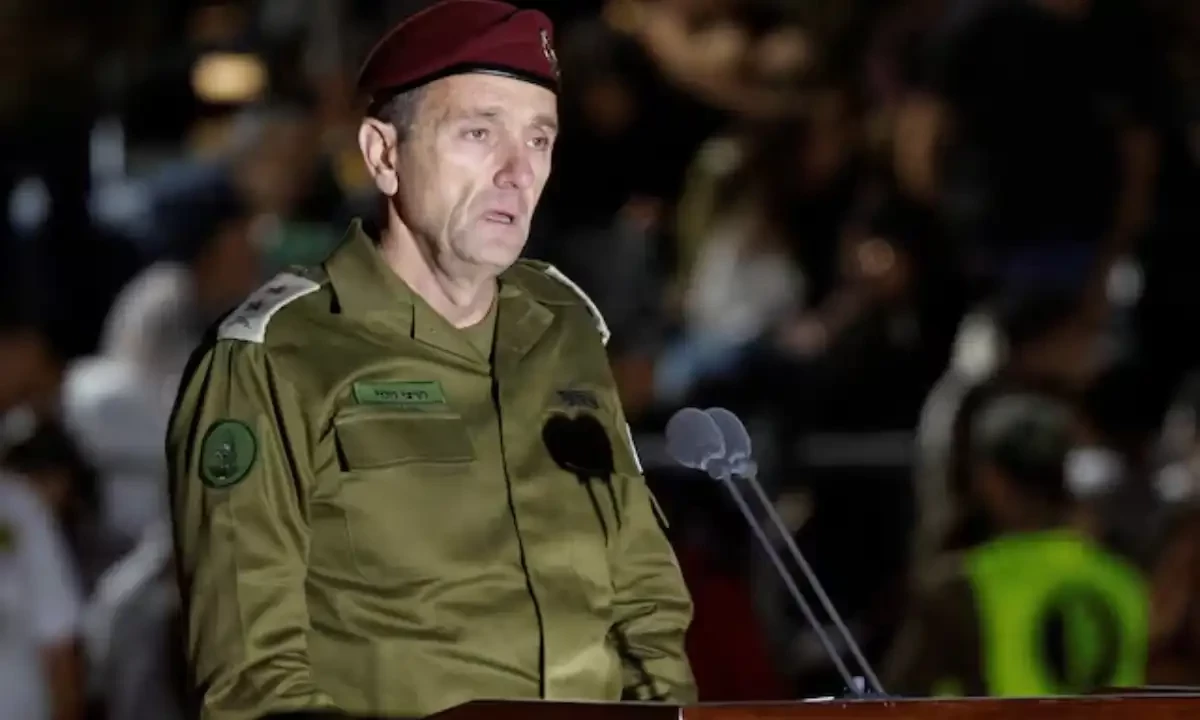

Israel’s army chief, Herzi Halevi, announced his resignation on Tuesday, set to take effect on March 6, following the devastating security failure on October 7, 2023, when Hamas gunmen launched a cross-border attack from Gaza. The attack resulted in the deaths of 1,200 Israelis and the capture of approximately 250 hostages.
Halevi, who had been expected to step down after the deadliest day in Israel’s history, took responsibility for the security lapse in his resignation letter to Defence Minister Israel Katz. In the letter, Halevi expressed deep regret, stating that Israel had paid a heavy price in terms of human lives, including those killed, injured, and taken hostage.
Halevi pledged to complete the Israel Defence Forces (IDF) inquiries into the events of October 7 and to bolster the military’s readiness for future security threats. However, it remains unclear who will succeed him as IDF chief. Halevi assured that the command would be passed on to a successor, though a replacement has not yet been named.
Despite public outrage over the attack, Prime Minister Benjamin Netanyahu’s government has resisted calls for an official state inquiry into the incident. Halevi’s resignation follows a series of military and political resignations, including that of former Defence Minister Yoav Gallant, who was dismissed by Netanyahu in November.
Halevi, a 40-year military veteran, admitted in his resignation letter that the IDF had failed in its mission to protect Israeli citizens on October 7. “My responsibility for the terrible failure accompanies me every day, hour by hour, and will do so for the rest of my life,” he wrote.
Halevi faced criticism from hardline members of Netanyahu’s government, particularly Finance Minister Bezalel Smotrich, who accused him of being too lenient in his handling of the Gaza war. Despite this, Smotrich acknowledged Halevi’s success in weakening Hamas’ military capabilities, while holding him responsible for the October 7 breach.
In the aftermath of the attack, Israel’s military regained its strength, with significant successes in its military efforts, including the destruction of Hamas’ infrastructure, weakening Hezbollah in Lebanon, and targeting Iranian-backed forces in Syria. Despite these achievements, Halevi’s resignation marks a critical moment in Israel’s ongoing conflict with Hamas and other regional adversaries.
