

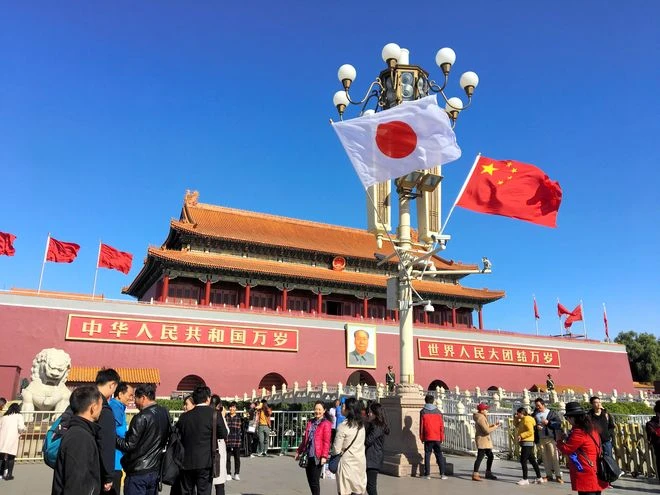

Japan has criticized China for obstructing people-to-people exchanges after Beijing canceled a trilateral culture ministers’ meeting with Japan and South Korea, citing tensions over Prime Minister Sanae Takaichi’s recent remarks on Taiwan.
The meeting, originally scheduled for this month in Macau, was shelved without an official announcement, South Korea’s Culture, Sports and Tourism Ministry said, with Tokyo confirming it had received no formal notification.
Japan’s Chief Cabinet Secretary Minoru Kihara described Chinese Foreign Ministry spokesperson Mao Ning’s explanation as “conflicting” with the shared goal of fostering constructive and stable relations.
Mao had stated that Takaichi’s “extremely erroneous remarks” had “disrupted the foundation and atmosphere of trilateral cooperation,” making conditions unsuitable for holding the meeting. Kihara refrained from commenting on the postponement, highlighting the lack of official communication regarding the decision.
Diplomatic tensions between Tokyo and Beijing escalated after Takaichi, on November 7, warned that any Chinese military action against Taiwan could be deemed a “survival-threatening situation,” which would justify Japan exercising its right to collective self-defense. Beijing condemned the statement and demanded a retraction, perceiving it as a challenge to its territorial claims over Taiwan.
Since the remarks, China has taken additional measures against Japan, including issuing travel and study advisories to its citizens, warning them against visiting the country.
Despite the rising tensions, Kihara reaffirmed Japan’s commitment to the 1972 Japan-China joint communiqué, under which Japan formally recognizes China and states that it “fully understands and respects” Beijing’s position that Taiwan is an “inalienable part” of Chinese territory.
The cancellation of the cultural meeting reflects growing strain in trilateral cooperation between Japan, China, and South Korea, particularly in the cultural and diplomatic arenas.
Officials in Tokyo emphasized that such moves hinder bilateral and regional dialogue, affecting not only government-level interactions but also the broader exchange between peoples, cultures, and academic communities across the three countries. Japan continues to seek avenues to maintain engagement and dialogue despite the current diplomatic friction.
