

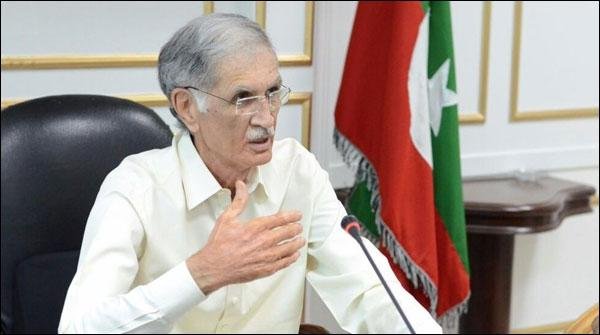

On Sunday, the Chairman of Pakistan Tehreek-e-Insaf (PTI) Parliamentarians, Pervez Khattak, voiced concerns over the country’s increasing debt, stating that despite 75 years of successive governments, Pakistan has failed to progress. The country had drowned in loans.
Addressing the media in Peshawar, Khattak criticized political parties for making unfulfilled promises during their rule.
During a gathering in Buner on Saturday, Khattak claimed that the PTI chief aimed to implement a presidential system for personal gains. He accused past leaders of leading the country into economic turmoil and asserted that PTI’s success was due to the support of Pakhtuns.
In another statement on Friday in Lower Dir, he accused the PTI chief of treating elected representatives like “Pharaohs.” He emphasized that the PTI’s agenda was to uplift the country, contrasting it with the alleged harm caused by previous administrations, which, according to Khattak, left the nation in a state of economic crisis.
Shamshad Akhtar Denies Demonetization Plans For Rs5,000 Note
Meanwhile, caretaker Finance Minister Shamshad Akhtar reiterated that the government has no plans to remove the Rs5,000 note from circulation. In a Saturday night interview on Dunya News, Akhtar emphasized that addressing Pakistan’s economic challenges requires implementing reforms that encourage investment rather than resorting to demonetization, which she deemed ineffective.
During the interview, Akhtar mentioned that she had introduced the Rs5,000 note during her tenure as the governor of the State Bank of Pakistan, responding to the government’s request at the time. She still views it as a positive step. Akhtar argued against demonetization, citing potential risks in handling smaller denominations if the Rs5,000 note were broken down.
Emphasizing the need to provide the public with investment opportunities, Akhtar suggested implementing new schemes and improving the stock exchange. She stressed the importance of addressing the black economy, which has flourished due to improper practices, and highlighted digitization as a key reform to combat it.
