

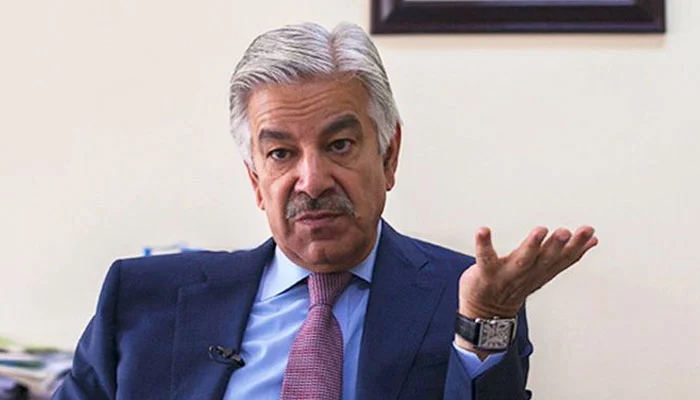

Defense Minister Khawaja Asif launched a scathing attack on Indian Prime Minister Narendra Modi, asserting that Modi’s political tenure is nearing its end and that the future of his leadership will ultimately be decided by the people of India.
Speaking to the media in Islamabad on Tuesday, Asif addressed the ongoing political and diplomatic tensions between India and Pakistan. He highlighted the growing criticism Modi is facing, both domestically within the Indian Parliament and internationally, noting that despite Modi’s recent attempts to downplay the situation in his national address, the complexities of the issues at hand cannot be resolved quickly.
“The people of India will determine Modi’s fate. His days are numbered,” Asif remarked, stressing that the matter could no longer be overlooked.
The defense minister also outlined key issues Pakistan intends to raise in future negotiations with India, with terrorism being a central focus. Asif pointed out that Pakistan has borne the brunt of terrorism, a situation exacerbated by Indian policies. He referenced Modi’s earlier remarks about investigating terrorism, calling this a necessary step given the current regional tensions.
“Terrorism has been a critical issue for Pakistan for more than 25 years. The world now acknowledges this, and it’s time India’s role in these matters is examined closely,” Asif said.
He further emphasized that Pakistan’s long-standing struggle against terrorism has not received the international recognition it deserves, despite the immense suffering Pakistan has endured due to this global threat.
On the subject of Kashmir, Asif reaffirmed that the dispute would remain a central issue in discussions between the two nations. He stressed the need for meaningful dialogue to resolve the issue once and for all.
The topic of the Indus Waters Treaty was also discussed, with Asif accusing India of attempting to turn the water dispute into a point of contention. He made it clear that the treaty, a legal agreement, should be respected by both sides and cannot be terminated unilaterally by one party.
“The treaty is legally binding, and both nations must honor its terms,” Asif stated.
In a pointed accusation, Asif labeled India an international sponsor of terrorism. He referenced multiple instances of Indian-backed terrorism in Pakistan and other parts of the world, including Canada and the United States, urging these facts to be brought to light in future diplomatic discussions.
“We have been fighting on both the eastern and western fronts for the past 25 years. The evidence of India’s involvement in terrorism is irrefutable and must be exposed,” Asif added.
