

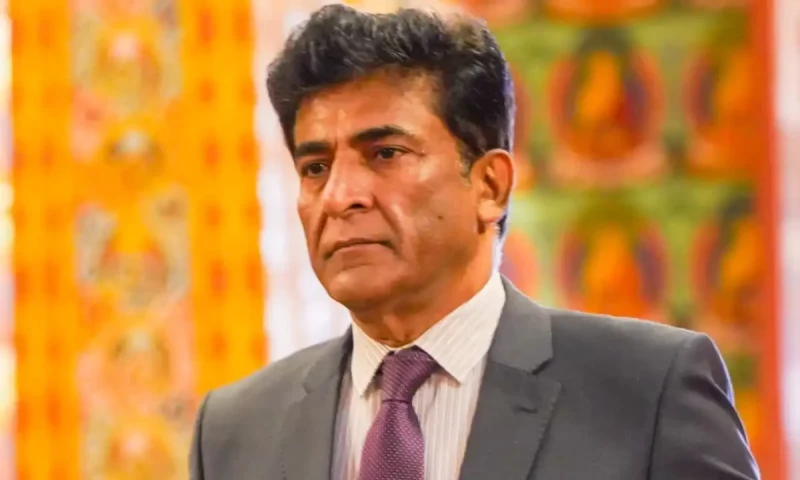

Pakistan Envoy
Pakistan’s High Commissioner to Bangladesh, Syed Maroof, has issued a cautionary advisory to Pakistani students residing in Bangladesh, urging them to exercise vigilance and avoid unnecessary trips outside their hostels.
This warning comes in response to the ongoing unrest following protests over employment quotas, which have yet to see a full return to normalcy.
In a video appearance on Rubarro, on Thursday, High Commissioner Maroof emphasized that the situation in Bangladesh remains unsettled.
The recent violence, sparked by demonstrations against politicized admission quotas for coveted government jobs, has resulted in significant casualties and disruptions.
According to an AFP tally, at least 174 people have died, including several police officers, and more than 2,500 individuals have been arrested amid the turmoil.
What initially began as protests against job quotas quickly escalated into some of the most severe unrest during Prime Minister Sheikh Hasina’s tenure.
The crisis led to the imposition of a curfew and the deployment of soldiers throughout the country. Additionally, a nationwide internet blackout severely restricted the flow of information, significantly impacting daily life.
In light of these circumstances, High Commissioner Maroof reported that the embassy has been actively supporting Pakistani students.
Those who expressed their needs have been accommodated at the embassy, where they have access to a fully stocked kitchen.
This arrangement allows students to prepare their own meals, as all necessary provisions have been made available.
The embassy has taken on the role of a “communication bridge” between the students and their families.
Despite the ongoing mobile phone and internet blackout, landline connections remain functional, enabling the embassy to check on students’ well-being and relay information to their families.
Addressing concerned parents, Maroof reassured them of their children’s safety and expressed optimism about a return to normal academic activities soon.
He also highlighted that Bangladesh remains a viable option for medical education in the South Asian region, despite the current security challenges.
The ambassador noted some progress as Bangladesh’s Supreme Court recently overturned most of the quotas on government jobs, which had been a central issue in the protests.
The court’s Appellate Division ruled to open 93% of government jobs to merit-based candidates, dismissing a lower court’s reinstatement of quotas.
In a positive development, Maroof mentioned that a tour of Dhaka for ambassadors and foreign missions had been organized, and traffic and street activity in the city have reportedly returned to normal levels, offering some relief for students studying in Bangladesh.
