

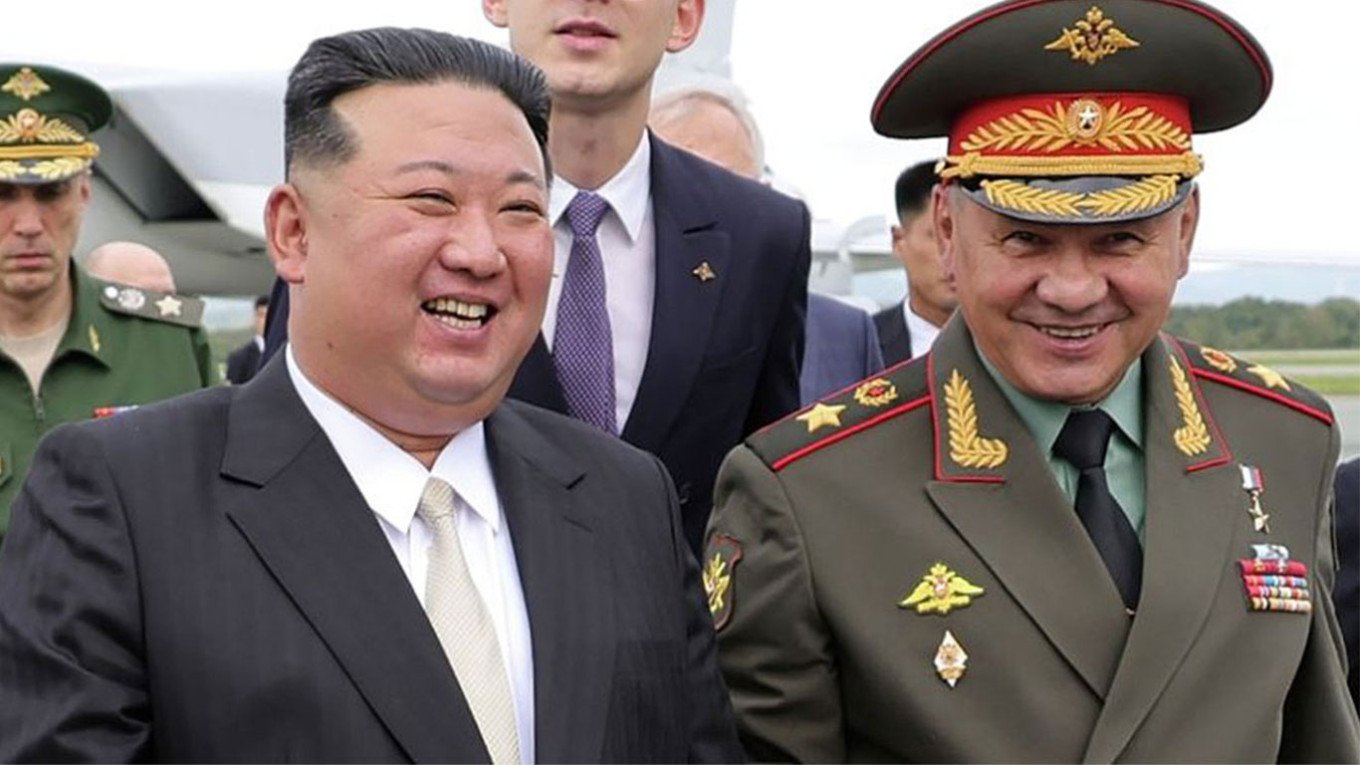

Continued shipments of North Korean arms to Russia during the winter are reportedly enabling Moscow to exert pressure on Ukraine, especially as the latter faces the potential loss of critical Western supplies.
The United States, South Korea, and Japan previously asserted in October that they had verified North Korea’s provision of arms and military equipment to Russia for potential use against Ukraine. They also claimed that Pyongyang sought military assistance from Moscow in return. Both Russia and North Korea have denied these allegations.
Satellite imagery from October to December 2023 indicates significant activity at North Korea’s Najin and Russia’s Dunay ports, 180 kilometers apart, with hundreds of shipping containers being loaded and unloaded from Russian ships, according to Bloomberg. Despite additional U.S. sanctions and widespread reporting on the matter, the trade between Russia and North Korea appears to have persisted. Analyst Jaewoo Shin noted that North Korea possesses some of the world’s largest munitions stores, much of which is compatible with Russian weapons deployed in Ukraine.
Recent deliveries are suspected to include 120mm mortars, 122mm and 152mm artillery shells, and 122mm rockets, potentially totaling another half million shells, according to conflict analyst Joost Oilemans, creator of the open-source intelligence project Oryx. South Korean intelligence suggested in November that over 1 million rounds of artillery had likely been delivered to Russia in ten shipments since August.
Oilemans highlighted that these ongoing arms shipments from North Korea to Russia could enable Russia to maintain higher pressure on Ukrainian forces for an extended period. Despite the reported deliveries, Russia and North Korea, who have pledged closer military cooperation, deny that the arms transfers are intended for use in the conflict in Ukraine.
The consistent flow of arms deliveries coincides with concerns about diminishing U.S. and European military aid, posing a threat to Ukraine’s capacity to defend itself against Russia. Former CIA Korea analyst Soo Kim, currently with the U.S. management consulting firm LMI, suggested that the collaboration between Russia and North Korea is likely to persist into 2024, citing sanctions as largely symbolic and insufficient.
