

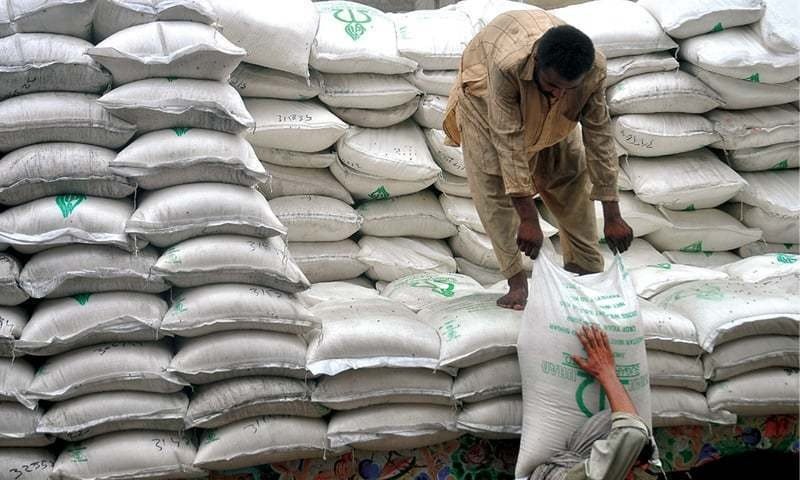

A massive Rs300 billion sugar profiteering scandal has come to light during a Public Accounts Committee (PAC) meeting, where the Auditor General of Pakistan revealed the staggering scale of corruption within the country’s sugar industry. The session, chaired by MNA Junaid Akbar, exposed how political elites and powerful industrialists manipulated sugar exports, imports, and prices to generate colossal profits — all at the public’s expense.
PAC member Riaz Fatyana claimed that the public was “cheated” out of Rs287 billion through artificial price manipulation, while another member, Sanaullah Mastikhel, pointed out that every Re1 increase in sugar prices yields a profit of Rs44 billion for mill owners. He criticized the Federal Board of Revenue’s (FBR) policies, questioning the logic behind exporting sugar only to import it back within the same year.
Zardari, Sharif Family, Tareen Accused of Profiteering
Pakistan Tehreek-e-Insaf (PTI) MNA Aamir Dogar ignited controversy by naming President Asif Ali Zardari as the largest sugar mill owner in the country, followed by Jahangir Tareen and the Sharif family. “Half of the sugar mills are owned by industrialists, the other half by elite political families,” Dogar said. “Even Prime Minister Shehbaz Sharif, along with his brother-in-law and sons, owns and operates sugar mills.”
Dogar’s statements sparked a strong backlash from Pakistan Peoples Party (PPP) members Shazia Marri and Bilal Ahmed Khan, who accused him of politicizing the PAC platform. Despite objections, Dogar refused to retract his claims, saying, “I said nothing wrong and won’t take it back.”
PAC member Khawaja Shiraz questioned why the names of those who made windfall profits have not been officially disclosed, and criticized the rising cost of sugar for ordinary citizens — which increased by Rs56 per kilogram. “Why do these scandals always happen when sugar mill owners are in power?” he asked.
FBR, Food Ministry, and Advisory Boards Under Scrutiny
The FBR presented a list of sugar mill directors, while the Ministry of Industries confirmed that the government approved the import of 500,000 metric tons of sugar, with 300,000 tons currently being brought in. Officials claimed sugar was exported because it deteriorates after three to four months, a justification met with skepticism by the committee. PAC members questioned how such perishable stocks could then be maintained for nine months as previously claimed.
PAC Chairman Junaid Akbar slammed the Ministry of Food for inaccurate data and warned that a privilege motion could be filed if misleading information continued. “This entire profit is going into the pockets of just 42 families,” he remarked.
PAC member Moin Aamir Pirzada blamed the Sugar Advisory Board, calling it a hub of corruption. He also accused top offices — including the president and prime minister — of enabling the exploitation. Members of the committee urged urgent reforms, including setting fixed sugar prices during crushing seasons, improving transparency in mill ownership, and ending the practice of re-importing previously exported sugar.
