


Ahsan Iqbal Slams Sudden Water Releases, Labels It ‘Water Aggression’
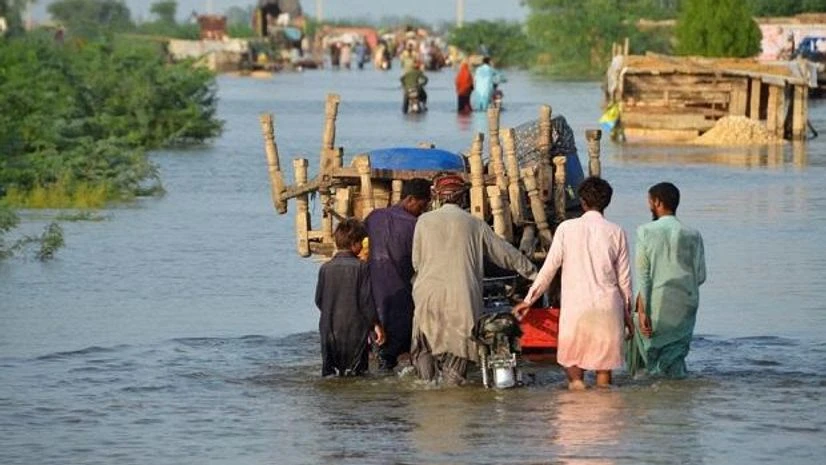
Planning and Development Minister Ahsan Iqbal has strongly criticised India for allegedly using water as a political weapon, accusing New Delhi of intentionally releasing massive volumes of water from upstream dams without prior notice. The abrupt discharge, he claims, has led to severe flooding in Punjab, where vast agricultural lands and residential areas remain submerged.
Speaking on Geo News’ programme Aaj Shahzeb Khanzada Kay Sath, Iqbal said, “India has started using water as a weapon.” He condemned the move as the “worst example of water aggression”, particularly in light of the Indus Waters Treaty (IWT), which mandates prior information-sharing on such water releases.
“India stores water and then suddenly releases it,” he added, calling the act a threat to both lives and property in downstream regions. Iqbal also criticised India’s failure to provide timely notifications, asserting that natural disasters should never be politicised, and cross-border cooperation on water management is crucial, especially under existing international agreements.
The Indus Waters Treaty, a decades-old water-sharing accord between Pakistan and India, has been under strain in recent years. India has partially suspended the treaty following the Pahalgam attack in IIOJK in April. However, the Permanent Court of Arbitration ruled in June that India cannot unilaterally abrogate or suspend the treaty, reaffirming that both the Court of Arbitration and the Neutral Expert retain full jurisdiction.
Flood Devastation Spurs Emergency Measures Across Pakistan
Meanwhile, the aftermath of the flooding has been catastrophic, with at least seven fatalities reported in Punjab’s Gujranwala Division. The National Disaster Management Authority (NDMA) has advised PDMA Sindh to begin evacuation efforts for communities living along the katcha areas and low-lying belts of the Indus River and its tributaries, anticipating further surges in water levels.
Punjab Chief Minister Maryam Nawaz has issued emergency directives to both provincial and district authorities. These include:
-
Ensuring on-ground presence of commissioners and deputy commissioners
-
Fast-tracking documentation of damage to homes and crops
-
Restricting public access to flood-prone zones
While India did alert Pakistan about the possibility of flooding, the information was conveyed via diplomatic channels, rather than through the bilateral Indus Commission, as specified in the IWT. This deviation from protocol has further angered officials in Islamabad, who have termed it an “inhumane and extremely regrettable” approach.
As floodwaters continue to rise, Pakistan’s call for transparency, coordination, and adherence to international agreements grows louder, with Iqbal warning that failure to cooperate could turn water into a source of long-term regional conflict.
