

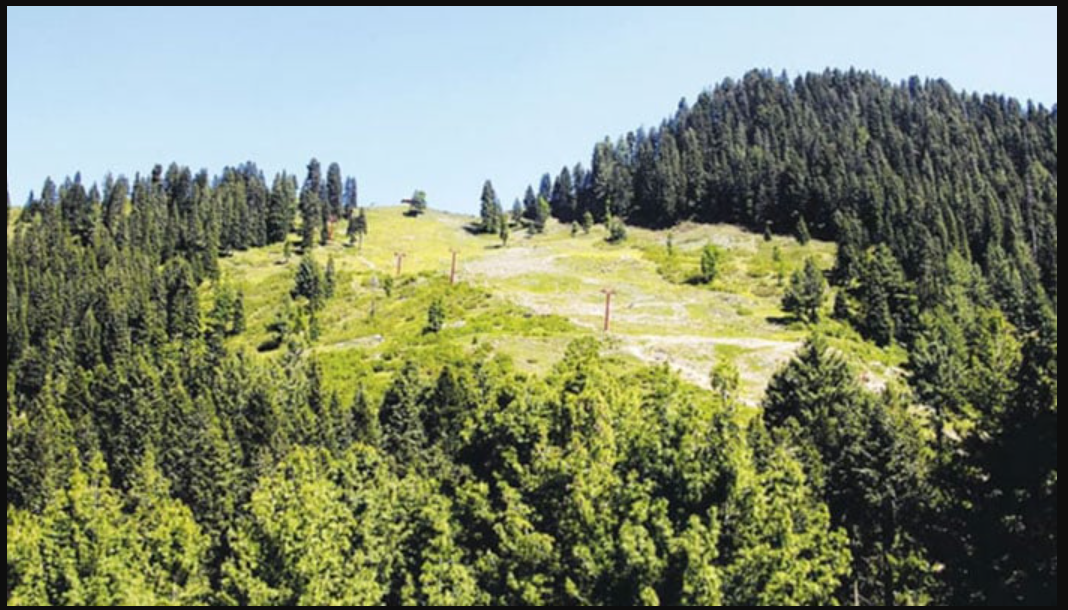

Pakistan is facing a critical environmental tipping point as the country’s forest cover has declined by 18% since 1992, exposing millions of people to devastating natural disasters. Environmental experts warn that unchecked deforestation, timber smuggling, forest fires, and climate change are accelerating the frequency of floods, landslides, and cloudbursts, turning the mountainous north into what they call “flood factories.”
The decline in forests and rangelands is not only an ecological concern but also a threat to Pakistan’s economy, food security, and national stability.
Why Forests Are Pakistan’s First Line of Defence
Forests in Pakistan are more than just natural resources — they serve as the nation’s first protective shield. They:
-
Absorb rainfall and reduce the risk of flash floods.
-
Recharge groundwater and protect farmland from erosion.
-
Maintain soil fertility, ensuring food security.
-
Moderate temperatures, store carbon, and regulate rainfall.
-
Provide fuel, fodder, medicines, fruits, and support biodiversity.
-
Safeguard infrastructure, settlements, and agricultural lands from floods, landslides, and droughts.
Experts warn that without urgent restoration, Pakistan will continue to face worsening climate disasters and economic setbacks.
Alarming Decline in Forests and Rangelands
Between 1992 and 2025, Pakistan’s forest cover dropped from 3.78 million hectares to 3.09 million hectares, marking an 18% reduction. While annual deforestation has slowed from 40,000 hectares in the early 1990s to around 11,000 hectares today, the figure still reflects an unsustainable loss rate.
Rangeland areas have also decreased, with biomass production falling to just 20-30% of potential yield, severely impacting livestock-dependent communities.
Regional Impacts:
-
Khyber Pakhtunkhwa: Largest share of forest loss, leading to devastating floods in Buner, Shangla, and Swat.
-
Chitral: Over 3,700 hectares of forest destroyed between 1992 and 2009; a further 23% decline expected by 2030.
-
Arandu Gol: Illegal cutting of 1.6 million cubic feet of timber — Pakistan’s largest recorded timber theft.
-
Swat Valley: Logging in the 1980s–90s worsened the destructive floods of 1992 and 2010.
-
Gilgit Baltistan: Forest cover now below 4%, leaving the region highly exposed to wildfires and glacial lake outburst floods.
Direct Link to Floods and Cloudbursts
Experts emphasize that deforested mountains heat up 5°C to 8°C more than forested areas, destabilizing rainfall patterns. Instead of steady rain, overheated mountains trigger sudden cloudbursts, a key factor behind recent floods in Bajaur, Buner, and Mansehra.
Without tree roots to anchor the soil, slopes collapse into landslides and mudslides, often cutting off major roads like the Karakoram Highway. In 2025 alone, flash floods caused by cloudbursts destroyed homes, agricultural fields, and infrastructure across northern districts.
Human and Economic Impact
Around one-third of households in Khyber Pakhtunkhwa rely on livestock and rangelands. With productivity now at just 20-30%, families are increasingly forced into unsustainable practices for survival.
Floods and landslides not only destroy lives and property but also damage critical infrastructure, isolate communities, and increase the burden on national disaster management systems.
Experts Call for Urgent Action
Environmental specialists stress that tree-plantation drives alone cannot resolve the crisis. They demand strict action against timber mafias, accountability for corrupt officials, and a comprehensive national strategy that prioritizes:
-
Watershed management to stabilize slopes and protect catchment areas.
-
Controlled grazing systems to restore rangelands.
-
Wildfire management units in vulnerable mountain districts.
-
Community-based reforestation to empower local participation.
-
Satellite monitoring systems for deforestation tracking.
-
Promotion of alternative fuel sources to reduce dependence on firewood.
A Call for National Emergency
Experts warn that Pakistan must treat the destruction of forests and rangelands as a national emergency. Without urgent, coordinated leadership, the country will face even more frequent and destructive floods, droughts, and landslides.
Dr. Khalid Khan, an environmentalist, stressed that Pakistan’s forests and rangelands are not simply natural assets but a strategic shield against climate disasters. Their continued destruction, he warned, threatens the very security and survival of the nation.
