

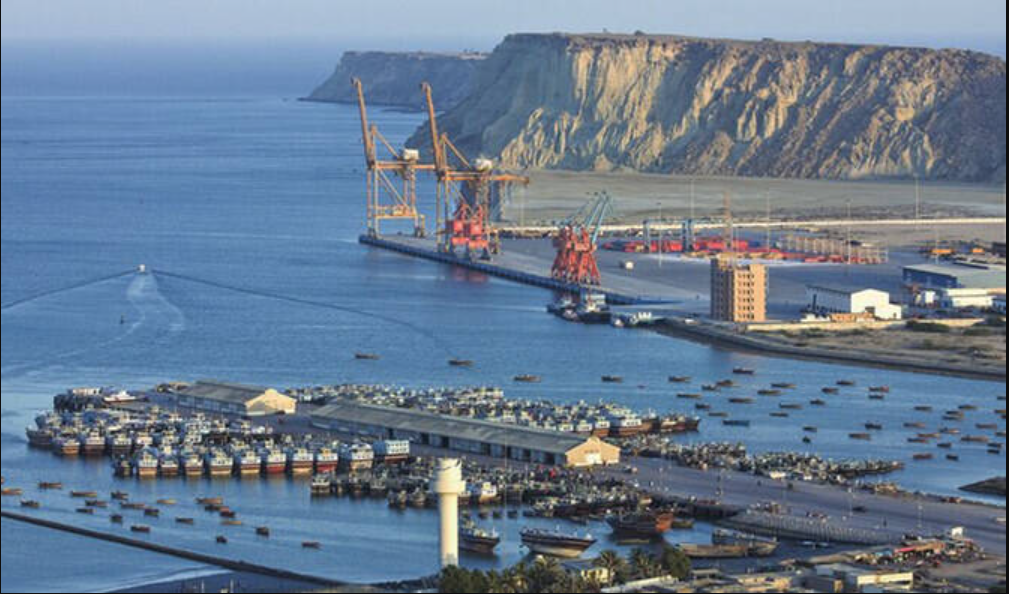

Pakistan has categorically denied reports suggesting that it offered the United States access to a proposed seaport project in Pasni, Balochistan. A senior security official clarified that no official communication or agreement has taken place between Islamabad and Washington regarding the development or operation of any port facility in the coastal town.
The clarification comes after an international media report claimed that advisers to Army Chief General Asim Munir had presented a proposal to U.S. officials for the development of a port in Pasni. The alleged project was said to aim at boosting American investment in Pakistan’s mineral-rich regions and enhancing access to natural resources.
No Formal Communication Between Islamabad and Washington
The senior official emphasized that no formal or government-backed discussions have been held between the two countries. Any exchanges that might have occurred, he added, were purely informal and exploratory in nature.
“There are no official plans or approved proposals involving Pasni port,” the official stated. “Conversations that may have taken place between private entities do not represent the stance of the Pakistani government or military.”
The government, he said, remains firm in its position that transferring security or operational control of any national port to a foreign power is not under consideration.
Clarification on Misleading Associations
Addressing speculation about the involvement of the Pakistan Army, the official dismissed claims that General Asim Munir’s advisers had formally approached the U.S. with such an offer. He termed these associations “misleading and inaccurate”, reiterating that the army chief does not have official advisers authorized to negotiate or propose development projects.
The remarks highlight Pakistan’s effort to dispel misconceptions about its foreign policy direction and protect the country’s sovereignty over strategic coastal infrastructure.
Pasni’s Strategic Significance and Development Status
Located in Balochistan’s Gwadar district, Pasni is a small coastal town with a population of around 70,000 people. The region is recognized for its deep-sea potential and proximity to Gwadar Port, which is already a key component of the China-Pakistan Economic Corridor (CPEC).
Despite its strategic value, the official confirmed that Pasni’s development remains at a conceptual stage. “Its geographical importance is acknowledged,” he said, “but no initiative has been approved or initiated at this time.”
International Report Sparks Debate
The international report had alleged that a proposal was reviewed by General Munir and discussed with American officials during recent meetings. However, both Pakistani authorities and U.S. agencies have refrained from issuing any formal statements in response to the claim.
Analysts note that if such a project were ever pursued, it could grant the U.S. a strategic foothold near China’s presence in Gwadar, potentially reshaping the geopolitical landscape of the Arabian Sea region. The claim, therefore, triggered intense debate regarding Pakistan’s delicate balancing act between its longstanding partnership with China and its economic and security cooperation with the United States.
Pakistan’s Balancing Act Between Global Powers
Experts believe Pakistan continues to navigate a complex foreign policy path, balancing its strategic ties with both Washington and Beijing. While foreign investment remains crucial for economic stability, officials maintain that all projects must align with national interests and security protocols.
The government’s swift denial of the Pasni port claims underscores its commitment to transparency, sovereignty, and regional stability. For now, there is no evidence of any active negotiations or agreements granting the U.S. access to the proposed Pasni seaport project.
As Pakistan seeks to attract international investment, its leadership continues to emphasize that national assets and strategic infrastructure will remain under sovereign control.
