

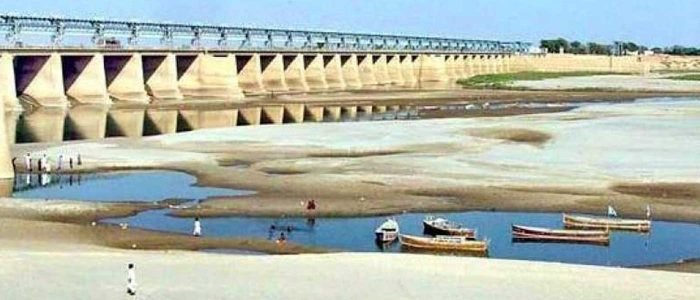

The Indus River System Authority (Irsa) has issued a warning that Pakistan will face a significant 43% water shortfall in April, attributed to below-normal snowfall, decreasing river inflows, and forecasts of a dry summer. This shortage comes at a critical time, as wheat harvesting is underway and preparations for summer crops such as cotton, rice, and sugarcane are beginning.
With water reservoirs at critically low levels, farmers—especially in Punjab and Sindh, the country’s agricultural heartlands—are facing severe irrigation shortages that could threaten crop yields.
The Irsa Advisory Committee (IAC), led by Sahibzada Muhammad Shabbir, met to approve anticipated water availability criteria for the Kharif 2025 season (April–September), but only finalized allocations for April due to the uncertainty surrounding climate conditions.
Pakistan’s key water reservoirs have dropped to what officials call “dead levels,” posing a serious risk to agricultural production. According to the latest figures from the Water and Power Development Authority (Wapda), both the Tarbela and Chashma reservoirs have reached their minimum operating levels, leaving no usable live water storage.
Tarbela, the country’s largest dam, is at 1,402 feet—its minimum threshold—with zero million acre-feet (MAF) of live storage. Similarly, Chashma stands at 638.15 feet, also showing zero MAF. Mangla, the second-largest reservoir, is holding just 20 feet of water above its dead level of 1,050 feet.
The Pakistan Meteorological Department (PMD) informed the committee that snowfall in the Indus and Jhelum catchments was recorded at just 26.8 inches—31% lower than the normal 49.7 inches. Coupled with below-average rainfall and above-average temperatures forecast for April to June, this is expected to further reduce water availability for irrigation and hydropower.
This water shortfall presents a major challenge for farmers, especially those dependent on the Indus River for irrigation during the Kharif season. Crops such as cotton, rice, and sugarcane require ample water supplies, and any shortages could significantly affect agricultural yields.
Irsa also reviewed water availability during the Rabi 2024-25 season (October-March) and reported an 18% shortfall as of March 20, slightly exceeding the anticipated 16%. Despite this, officials expressed satisfaction with the seasonal management of water resources.
Given the uncertain climatic conditions, the committee approved only the water distribution for April and plans to reassess the situation in early May. Irsa officials emphasized the importance of monitoring evolving weather patterns and snowmelt, with the possibility of further water distribution cuts if inflows continue to be low.
Experts are urging authorities to adopt better conservation strategies and improve reservoir management to address the intensifying challenges of water scarcity, compounded by climate change. The advisory committee meeting included representatives from provincial irrigation departments, Wapda, and senior officials from the Tarbela and Mangla dams.
