


Indian Spy Plane
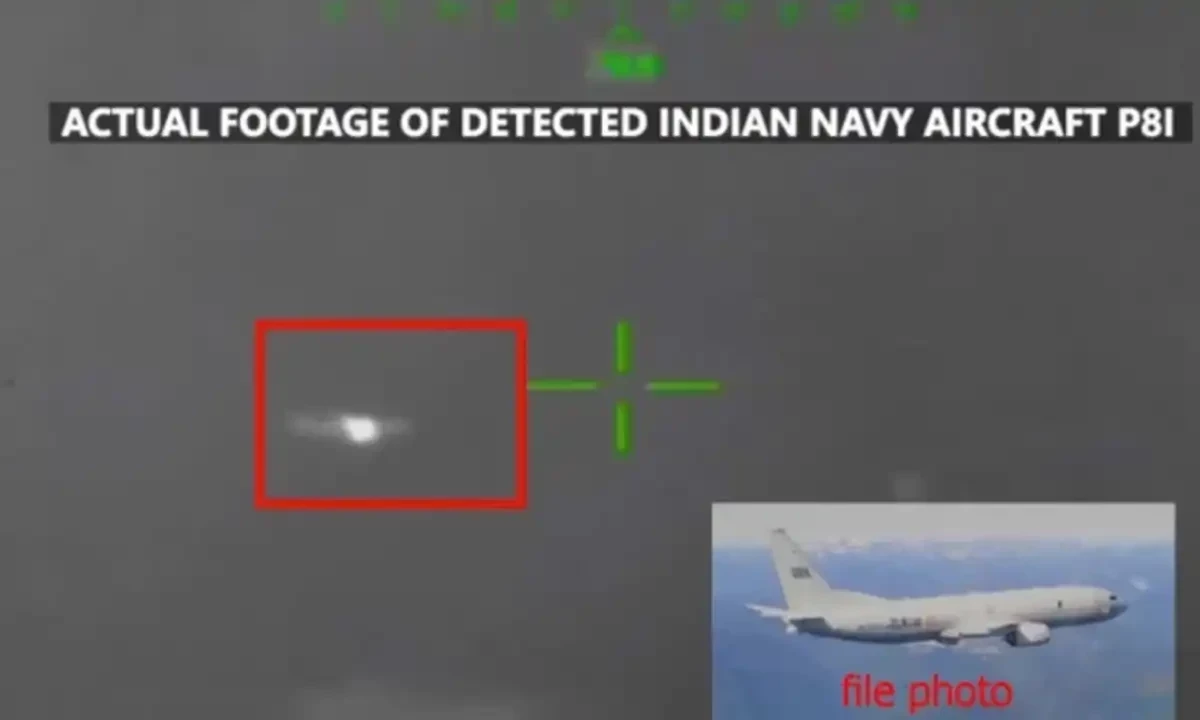
In a significant development amid escalating regional tensions, the Pakistan Navy has detected and monitored an Indian maritime patrol aircraft operating near its maritime boundaries, security sources confirmed late Monday night.
The aircraft, identified as a U.S.-manufactured P-8I used extensively by the Indian Navy for surveillance and intelligence missions, was observed conducting reconnaissance activity close to Pakistan’s territorial waters.
According to official sources, the Pakistan Navy remained on high alert during the incident, maintaining full operational readiness to respond to any potential act of aggression. Military officials underscored that while Pakistan continues to advocate for peace and stability in the region, it will not hesitate to defend its sovereignty and respond decisively if provoked.
The sighting of the P-8I aircraft comes against the backdrop of heightened tensions between India and Pakistan, particularly following the tragic April 22 attack on a tourist group in the Pahalgam area of Indian-occupied Kashmir, which resulted in the deaths of 26 individuals.
India swiftly blamed Pakistan for the assault—a claim Islamabad strongly denies. In retaliation, India suspended the long-standing Indus Waters Treaty and issued orders for all Pakistani nationals to exit the country. Pakistan, in turn, responded by closing its airspace to Indian aircraft, further escalating the diplomatic and military standoff.
This latest aerial surveillance activity is being viewed by analysts as part of India’s broader intelligence-gathering efforts amid a volatile situation. The deployment of the P-8I aircraft—a high-tech maritime surveillance jet equipped with state-of-the-art radar and sensors—is often seen in scenarios involving heightened military caution or preparatory positioning.
Meanwhile, Pakistan has formally requested an international investigation into the Pahalgam attack, citing the need for a transparent and impartial inquiry.
The call has gained support from several nations, including China, Türkiye, and Switzerland. However, India has yet to respond to the request, maintaining its accusatory stance.
In a briefing to political leadership earlier this week, Director General Inter-Services Public Relations (DG ISPR) Lt Gen Ahmed Sharif Chaudhry reiterated Pakistan’s commitment to peace, while making it clear that any attempts to impose war would be met with a robust and strategic response.
