

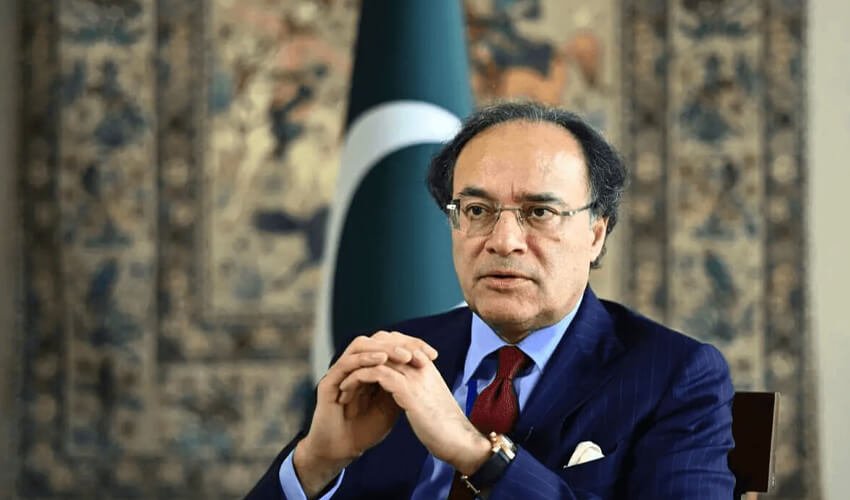

As tensions rise in the Middle East, Finance Minister Muhammad Aurangzeb affirmed on Tuesday that Pakistan is adequately prepared to handle any regional fallout. Speaking at the National Workshop on Transitioning to Defined Contribution Pension Schemes, organized by the Securities and Exchange Commission of Pakistan (SECP) in Islamabad, the minister emphasized the government’s proactive stance.
He stated that a high-level meeting held on Monday included all key stakeholders, focusing on price trends, stock availability, and contingency planning across asset classes. “We are well-positioned to respond if the situation escalates further. Hopefully, that won’t be necessary,” Aurangzeb remarked.
The renewed hostilities between Israel and Iran have raised fears of broader regional conflict that could severely disrupt oil supplies. In response, Prime Minister Shehbaz Sharif has formed a special committee tasked with overseeing petroleum pricing and ensuring supply chain stability during the ongoing uncertainty.
On the economic front, Aurangzeb shared a positive update regarding trade talks with the United States. He described his recent meeting with US Commerce Secretary Howard Lutnick as “constructive and positive,” noting that both sides are working toward enhancing Pakistan’s competitiveness in the US market.
He expressed optimism that ongoing discussions would lead to favorable outcomes, particularly regarding the high reciprocal tariffs imposed by Washington. “There is forward momentum in our strategic partnership with the US,” he noted.
These efforts follow a move in April by US President Donald Trump to impose sweeping tariffs globally, including harsh penalties on Pakistani exports. Pakistan has since been lobbying for tariff relief, especially from the 29% duties imposed under the new trade regime.
Aurangzeb also reiterated the government’s commitment to economic reform, highlighting key initiatives in energy pricing, state-owned enterprise (SOE) restructuring, and tax policy. “We’ve undertaken fundamental reforms related to tariffs, aiming to transform Pakistan into a more competitive economy and reduce protectionist barriers for exporters,” he said.
Additionally, the finance minister pointed out the rising burden of pension payments, which now exceed a trillion rupees—surpassing the federal development budget. He emphasized the need to reduce debt servicing costs as part of the broader fiscal strategy.
