

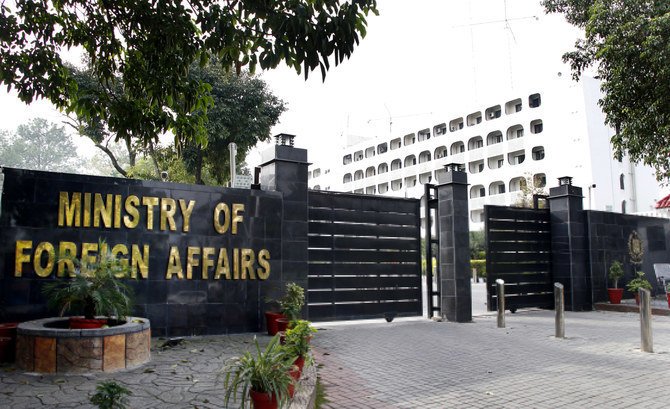

The Foreign Office (FO) on Monday welcomed the Permanent Court of Arbitration’s (PCA) issuance of a “supplemental award” in the Indus Waters dispute and called on India to immediately resume the normal implementation of the Indus Waters Treaty (IWT), which New Delhi has kept in abeyance since May.
Under the PCA’s procedures, a supplemental award clarifies unresolved matters or addresses specific legal questions from an earlier ruling—often related to jurisdiction, competence, or interpretation of a treaty.
India had suspended the IWT in April following an attack in Pahalgam, occupied Kashmir, that left 26 people dead—an act it attributed to Pakistan without presenting evidence. Pakistan condemned any move to block its water share as an “act of war,” pointing out that the treaty has no clause for unilateral suspension, and hinted it might seek legal recourse under the 1969 Vienna Convention on the Law of Treaties.
“In its supplemental award issued on June 27, 2025, the Court of Arbitration affirmed its jurisdiction over the ongoing dispute concerning the Kishenganga and Ratle hydropower projects, and stressed its duty to move forward with the proceedings fairly and efficiently,” the FO said in a statement.
The FO described the court’s decision as a vindication of Pakistan’s stance that the treaty remains active and binding, leaving India with no legal basis to suspend or hold it in abeyance on its own.
It further urged India to “fully and faithfully resume its treaty obligations and ensure the continued functioning of the IWT.”
Pakistan had already expressed its appreciation for the PCA’s decision to issue the “Supplemental Award of Competence,” reiterating that New Delhi’s suspension of the treaty had no legal standing.
“Pakistan looks forward to the court’s upcoming decision on the merits of the case, following last year’s hearings held at the Peace Palace in The Hague,” the statement added.
The FO also echoed Prime Minister Shehbaz Sharif’s earlier remarks, reaffirming Pakistan’s willingness to engage in comprehensive dialogue with India on all unresolved issues—including Jammu and Kashmir, water, trade, and terrorism.
In response, India’s Ministry of External Affairs rejected the supplemental award outright, claiming it does not recognise the PCA tribunal. According to Indian media reports, the ministry argued that the court’s formation itself violates the IWT and renders its proceedings and decisions “illegal and void.”
India maintained it had suspended the treaty after the Pahalgam attack, exercising what it described as sovereign rights under international law, until Pakistan “credibly and irreversibly stops supporting cross-border terrorism.” The MEA dismissed the PCA’s findings as a “charade at Pakistan’s behest.”
In its own press release, the PCA clarified that the IWT does not allow for unilateral suspension or abeyance and remains in effect until both India and Pakistan agree to terminate it.
“The court concluded that neither party can, on its own, interrupt or suspend the dispute resolution process, as doing so would undermine the purpose and effectiveness of the treaty’s compulsory third-party dispute mechanism,” the statement read.
It added that India’s justification under international law did not grant it the power to hold the treaty in abeyance unilaterally.
