

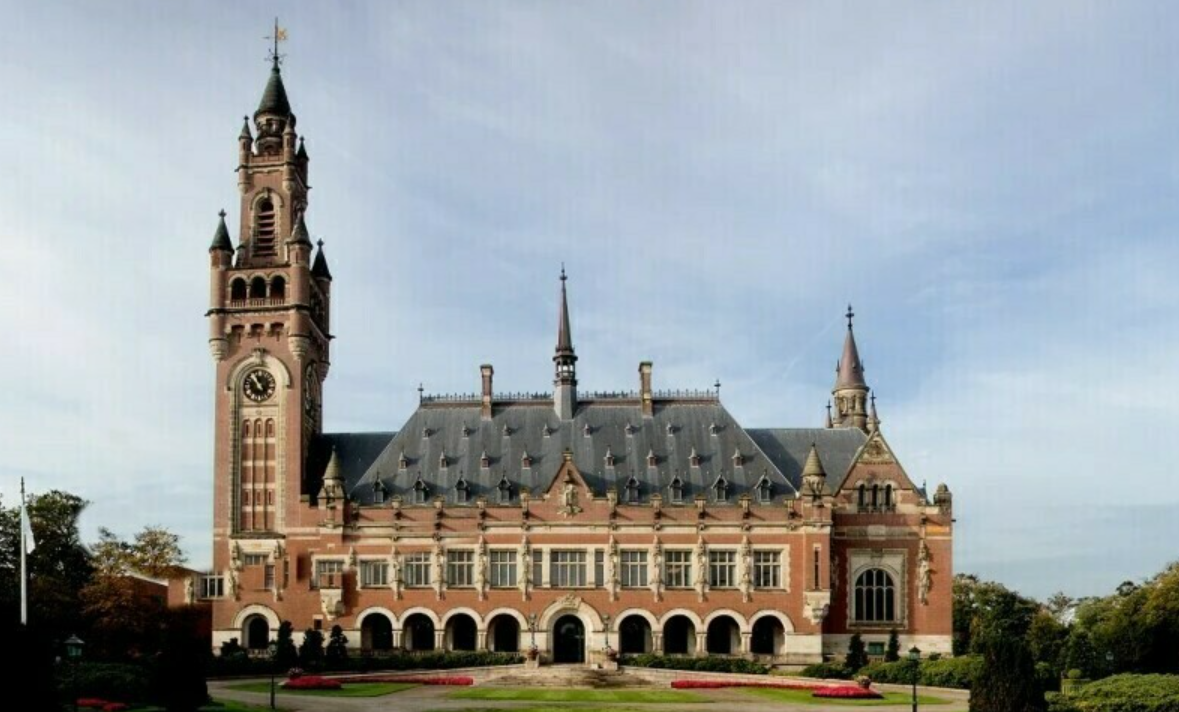

The Government of Pakistan has expressed strong approval of a recent decision by the Permanent Court of Arbitration (PCA) in The Hague, which issued an “Award on Issues of General Interpretation of the Indus Waters Treaty (IWT)” in the long-standing water dispute with India. The tribunal ruled that India must generally allow the natural flow of water from the western rivers — Indus, Jhelum, and Chenab — for Pakistan’s unrestricted use, in line with the treaty provisions.
The IWT, signed in 1960, governs the use of transboundary rivers between the two countries. In April this year, India announced it was placing the treaty “in abeyance” following an attack in Pahalgam, Indian-administered Kashmir, which left 26 dead, an incident it attributed to Pakistan without providing evidence. Islamabad categorically rejected the allegation and declared that any move to suspend its water allocation would be considered an act of war, noting that the treaty contains no clause allowing unilateral suspension. Pakistan also signaled its readiness to pursue legal remedies under the 1969 Vienna Convention on the Law of Treaties.
In June, the PCA issued a supplemental award, determining that India could not lawfully suspend the treaty on its own. However, New Delhi maintained that it did not recognize the tribunal’s jurisdiction or its rulings.
The newly issued August 8 award stems from arbitration proceedings initiated by Pakistan in August 2016 under Article IX and Annexure G of the IWT. These proceedings specifically addressed the treaty’s application to the design and operation of run-of-river hydroelectric plants India is allowed to construct on western river tributaries.
The award clarified that Article 3 of the treaty establishes a fundamental rule: India must allow the western rivers to flow for Pakistan’s benefit, with only narrowly defined exception, such as certain hydroelectric projects, that must strictly comply with the treaty’s technical parameters rather than India’s own engineering preferences.
The court stressed that both countries should resolve disagreements over water rights through the IWT’s established mechanisms for notification, objection, and dispute resolution, thereby upholding the treaty’s goals of cooperation and mutual respect.
Although India has boycotted these arbitration proceedings, the PCA emphasized that it kept New Delhi informed throughout and allowed opportunities for participation. The tribunal also took independent steps to verify Pakistan’s claims by requesting additional submissions, conducting in-depth questioning during hearings, and reviewing historical and publicly available records.
The award’s findings confirmed that decisions by a Court of Arbitration are binding, final, and carry legal precedence over subsequent rulings by neutral experts or other arbitration panels. Similarly, a neutral expert’s rulings within their scope are binding on both states and on any related arbitration body.
Highlighting Pakistan’s vulnerable position as the downstream user of shared rivers, the tribunal reiterated that the treaty’s core purpose is to clearly define each side’s rights and obligations, alongside robust dispute resolution mechanisms to prevent potential conflict. It further noted that certain treaty provisions, such as those on low-level outlets, gated spillways, and turbine intakes, were deliberately designed to address Pakistan’s concerns over possible water withholding or sudden releases from Indian reservoirs.
On the issue of maximum pondage (reservoir storage), the court ruled that capacity should be calculated based on a seven-day minimum flow, factoring in downstream release obligations, and must not exceed twice the calculated requirement. Freeboard heights, it added, should only be as high as necessary to ensure dam safety, following internationally recognized standards.
The ruling also instructed both parties to cooperate early in the design phase of any new Indian hydroelectric plant to ensure compliance with the treaty and to accommodate valid Pakistani concerns. Ultimately, it placed the responsibility on India to prove that its projects meet IWT requirements.
The award does not yet apply its conclusions to the specific Kishenganga or Ratle projects, the two Indian plants that prompted Pakistan’s 2016 arbitration request. The court will decide on these cases in later proceedings after hearing further views from both sides.
Pakistan’s Foreign Office hailed the ruling as a significant validation of its consistent position on the IWT and urged India to restore normal treaty operations without delay and fully implement the binding decision.
