

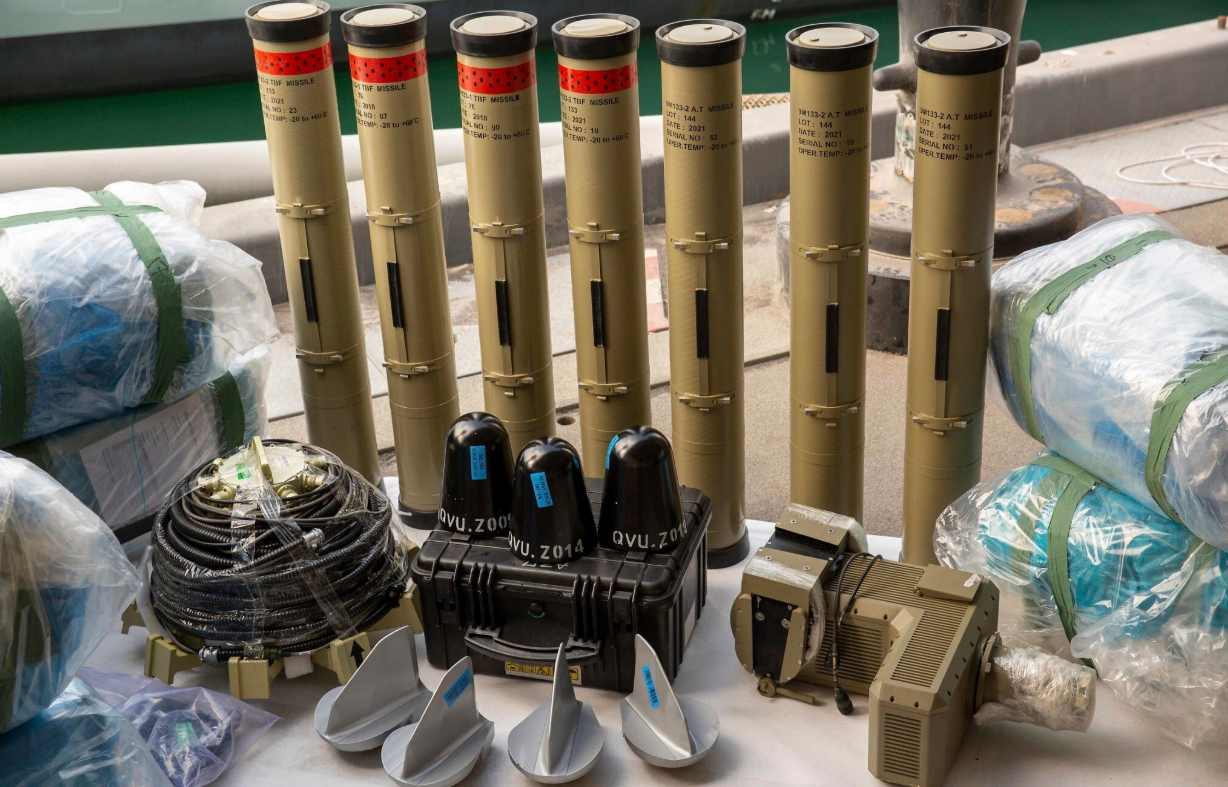

A Virginia court has sentenced a Pakistani national, Muhammad Pahlawan, to 40 years in prison for smuggling Iranian-made missile components and weapons to Yemen’s Houthi rebels. The 49-year-old was found guilty of providing material support to a terrorist organization after a months-long trial that exposed his role in a covert weapons trafficking operation across the Arabian Sea.
Covert Smuggling Operations Disguised as Fishing
According to court documents, Pahlawan operated under the guise of a fishing business while transporting Iranian arms to Yemen. He organized several smuggling missions from Iran’s Chabahar port, using small fishing vessels to conceal missile parts, warheads, and anti-ship cruise components. Investigators discovered that he had made at least two successful deliveries in late 2023, before being apprehended during a US Navy operation in January 2024.
The mission turned tragic when two American sailors drowned while attempting to intercept the vessel. Despite efforts by the Navy and Coast Guard, their bodies were never recovered.
Details of the Interception
Crew members told investigators that they were asleep when they heard the sound of helicopters and ships on the night of January 11, 2024. Pahlawan reportedly mistook the approaching forces for pirates and ordered the crew to continue sailing. US naval officers faced resistance during boarding attempts, leading to chaos on deck.
Subsequent searches revealed sealed packages that were later confirmed to contain ballistic and cruise missile components. The US military stated that this was the first successful interception of Iranian weapons bound for Houthi rebels since the Red Sea attacks began.
Testimonies Reveal Hidden Exploitation
Several Pakistani crew members testified that they had been unaware of the smuggling operation and believed they were employed for legitimate fishing trips. They claimed that sealed cargo was loaded in Iran and transferred to another vessel off the coast of Somalia.
Investigations confirmed that Pahlawan had recruited 12 Pakistani workers seeking employment in Iran for his illegal operations. These men were misled and unknowingly became part of the smuggling route.
Verdict and Sentencing
On June 5, 2025, the Virginia court found Pahlawan guilty of supplying missile technology to a terrorist organization, violating international sanctions, and causing the deaths of US personnel during the operation. His defense lawyer appealed for leniency, citing the hardship faced by Pahlawan’s family. However, the court ruled that the gravity of the crime warranted the full sentence.
The judge emphasized that the smuggling of advanced weaponry to conflict zones poses a direct threat to global security. The court’s decision reflects Washington’s firm stance on countering arms trafficking networks linked to Iran and militant proxies in the Middle East.
Broader Implications
Experts say the case underscores the increasing complexity of arms smuggling networks operating through the Arabian Sea. These covert routes often exploit vulnerable laborers and small fishing vessels to mask their true purpose. Analysts believe that stricter maritime monitoring and international cooperation will be vital to prevent future incidents.
Pahlawan’s conviction marks one of the most severe sentences for an international arms trafficking case involving Iranian weapons.
