

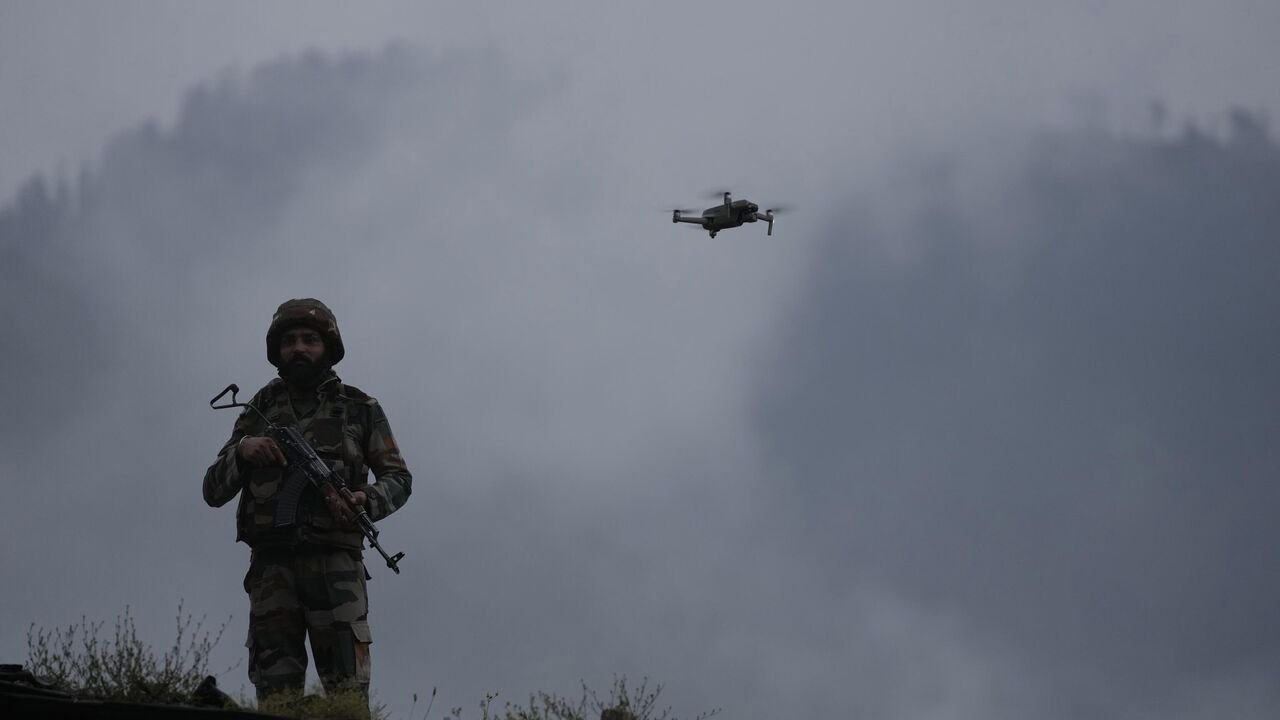

The conflict between India and Pakistan has erupted across multiple dimensions, leaving extensive and long-term repercussions in its wake.
Even before missiles were launched, India’s financial markets suffered a staggering blow. In just 48 hours, nearly ₹6.9 trillion ($83 billion) in market value was wiped out. The Nifty 500 index plummeted, with heavyweights like Reliance Industries falling by 2.1%, HDFC slipping 2%, and major banks enduring deep losses. Trading algorithms scrambled to find buyers — but the market was deserted.
By nightfall, the war had reached full scale.
Pakistan initiated Operation Bunyan ul Marsoos, unleashing a calculated barrage using Fateh-1 rockets and Babur cruise missiles. Impact points appeared across screens in Rawalpindi, pinpointing strategic Indian military sites:
Pathankot, Udhampur, Uri, Adampur, Nagrota, KG Top, and Beas.
International news agencies confirmed direct hits, while local Indian feeds showed missile trails over Jammu and explosions in Rajouri. One of India’s top defense assets — the S-400 radar system in Srinagar — was reportedly neutralized.
New Delhi remained silent.
But this was only the surface.
A cyber onslaught followed:
- 10 SCADA systems were destroyed
- 1,744 servers erased
- 13 government websites taken offline
- Rail networks disrupted
- Power grids severely throttled
- Mumbai operated on emergency reserves
As global attention remained fixed on aerial warfare, Pakistan deployed more covert tools — GPS spoofing, signal interference, satellite disabling, data breaches, and narrative manipulation.
India’s hesitation deepened as critical systems failed and public confidence eroded.
Amid the chaos, rumors swirled. A high-priority flight departed from Pakistan’s Nur Khan Airbase just moments before hostilities began. The passengers? Not generals, but prominent cricket players.
Coincidence? Unlikely.
In war, such timings often carry deeper meaning.
This was not a conventional retaliation — this was fifth-generation warfare in action.
Where the battleground is digital, the arsenal is invisible, and fear becomes the most potent weapon.
No tanks. No peace accords.
Just code, cables, commands — and control.
